
Organizations today face a complex dilemma when planning their digital infrastructure: how to leverage the scalability and cost-efficiency of public cloud services while maintaining the strict security controls and data sovereignty required for sensitive workloads. The hybrid cloud model offers a strategic solution to this tension, allowing businesses to dynamically allocate resources across on-premises private clouds, dedicated servers, and multi-tenant public environments. By integrating these distinct architectures, companies can optimize their Total Cost of Ownership (TCO) without compromising on compliance or performance.
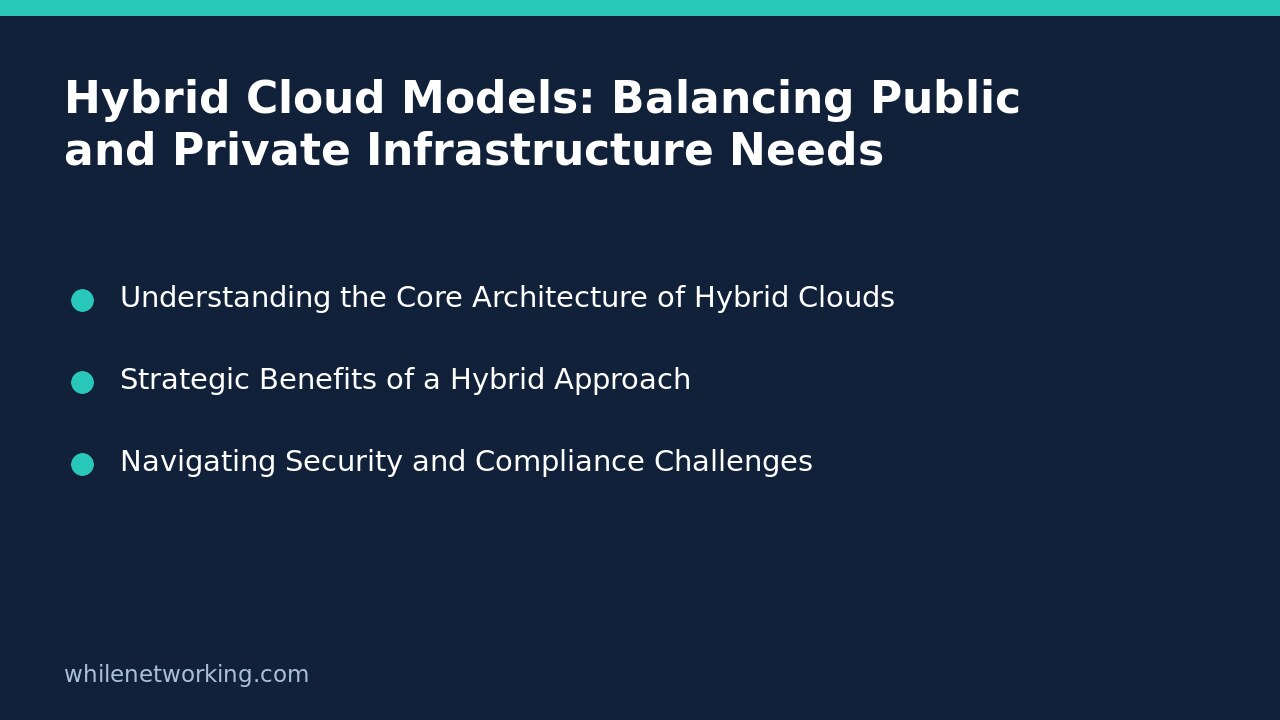
Understanding the Core Architecture of Hybrid Clouds
A hybrid cloud is not merely a collection of disconnected systems; it is an integrated environment where private and public clouds work together through standardized or proprietary technology that enables data and application portability. This setup typically involves using a public cloud provider, such as AWS, Microsoft Azure, or Google Cloud Platform, for non-sensitive workloads like web hosting, development environments, or customer-facing applications. Simultaneously, the organization retains a private cloud—often hosted on-premises or in a colocation facility—for critical data, legacy applications, and highly regulated sectors like healthcare or finance.
The key differentiator from a multi-cloud strategy is the intentional linkage between these environments. Without proper orchestration tools and APIs, a hybrid setup can devolve into a fragmented mess of shadow IT. Successful implementation requires robust middleware, identity management systems, and networking solutions that ensure seamless communication between the private data center and the public cloud instances.
Strategic Benefits of a Hybrid Approach
The primary driver for adopting a hybrid model is cost optimization combined with risk mitigation. Public clouds operate on a pay-as-you-go basis, which is ideal for variable workloads such as seasonal e-commerce spikes or large-scale data processing tasks that do not justify permanent hardware investment. Conversely, private infrastructure ensures that sensitive intellectual property and personally identifiable information (PII) remain within the organization’s physical perimeter or a trusted third-party data center, adhering to strict regulatory frameworks like GDPR or HIPAA.
Furthermore, hybrid clouds enhance disaster recovery capabilities. Organizations can replicate critical data from their private servers to public cloud storage buckets in real-time. In the event of an on-premises failure, workloads can failover to the public cloud instantly, minimizing downtime. This flexibility allows IT teams to scale resources up or down without the capital expenditure traditionally associated with expanding physical data centers.
Navigating Security and Compliance Challenges
While hybrid clouds offer flexibility, they introduce a complex security surface area that must be carefully managed. The most common mistake organizations make is assuming that public cloud providers handle all security responsibilities. In reality, security follows a shared responsibility model where the provider secures the infrastructure, but the customer must secure their data, identity policies, and access controls.
When bridging private and public environments, network segmentation becomes critical. Organizations must implement Zero Trust architecture principles, verifying every request regardless of its origin. Encryption protocols must be consistent across both environments to prevent data leakage during transit. Additionally, compliance teams must ensure that data residency laws are respected; for instance, EU-based customer data may legally require storage within the European Union, even if the public cloud provider has global nodes available.
Implementation Strategies and Common Pitfalls
To build a resilient hybrid cloud, start by identifying which workloads belong in each environment. A practical rule of thumb is to place volatile, non-sensitive data in the public cloud and keep static, sensitive data on-premises. Utilize containerization technologies like Kubernetes with tools such as OpenShift or Rancher to abstract applications from the underlying infrastructure, making it easier to move containers between private and public clusters.
A frequent pitfall is underestimating the complexity of networking. Connecting a private data center to a public cloud often requires Direct Connect or ExpressRoute setups, which involve significant configuration and latency considerations. Another mistake is neglecting identity federation. If your employees use single sign-on (SSO) for internal apps but not for public cloud resources, you create security gaps. Ensuring that Active Directory or similar identity providers are federated with the public cloud is essential for a unified user experience.
Real-World Example: Retail Banking During Peak Seasons
Consider a regional retail bank facing increasing demand during holiday shopping seasons. Their core banking systems and customer financial records reside in a highly secure, air-gapped private data center to meet strict banking regulations. However, their mobile app and online banking portal experience heavy traffic spikes that would require massive hardware upgrades if handled solely on-premises.
In this scenario, the bank utilizes a hybrid model where the user interface and transaction processing for non-sensitive queries run on public cloud instances. During peak hours, these instances scale automatically to handle millions of concurrent users. As soon as the traffic subsides, the resources are released, saving money. Meanwhile, all actual financial transactions are validated and settled by the private core system before being confirmed back to the user. This approach balances cost efficiency with the absolute necessity of security and compliance.
Checklist for Successful Hybrid Cloud Migration
Before finalizing your strategy, review this checklist to ensure a smooth transition:
* Audit Your Data: Classify all data based on sensitivity and regulatory requirements.
* Define Workload Placement Rules: Clearly document which applications live where and why.
* Select Orchestration Tools: Choose middleware that supports both private and public environments natively.
* Plan for Network Latency: Design applications to handle the slight latency introduced by hybrid connections.
* Establish Identity Management: Implement a unified identity provider before migrating workloads.
* Test Failover Scenarios: Regularly run drills to ensure you can switch between private and public environments without data loss.
Conclusion
The hybrid cloud model represents a mature evolution of IT infrastructure, offering the best of both worlds: the agility of the public cloud and the control of the private cloud. However, achieving this balance requires careful planning, robust security protocols, and a clear understanding of your specific business needs. By avoiding common pitfalls like fragmented networking and inconsistent security policies, organizations can build a resilient digital foundation that supports growth while maintaining the highest standards of data protection. As technology continues to evolve, the ability to seamlessly integrate diverse computing environments will remain a competitive advantage for forward-thinking enterprises.