
In the modern professional landscape, networking is often misunderstood as simply exchanging business cards or attending every industry conference in sight. While face-to-face interactions remain valuable, the most effective networkers are those who cultivate a reputation that draws connections to them organically. This approach shifts the dynamic from “asking for help” to “being sought after.” By intentionally building a personal brand, you signal your expertise and values to the world, creating a magnetic effect where opportunities arrive without constant self-promotion.
Building this kind of brand requires consistency, authenticity, and a strategic focus on providing value before asking for anything in return. It is not about crafting a perfect image; it is about ensuring that the story you tell aligns with the reality of your skills and character. When your online presence and professional conduct reflect genuine competence, potential partners, employers, and collaborators will naturally gravitate toward you.
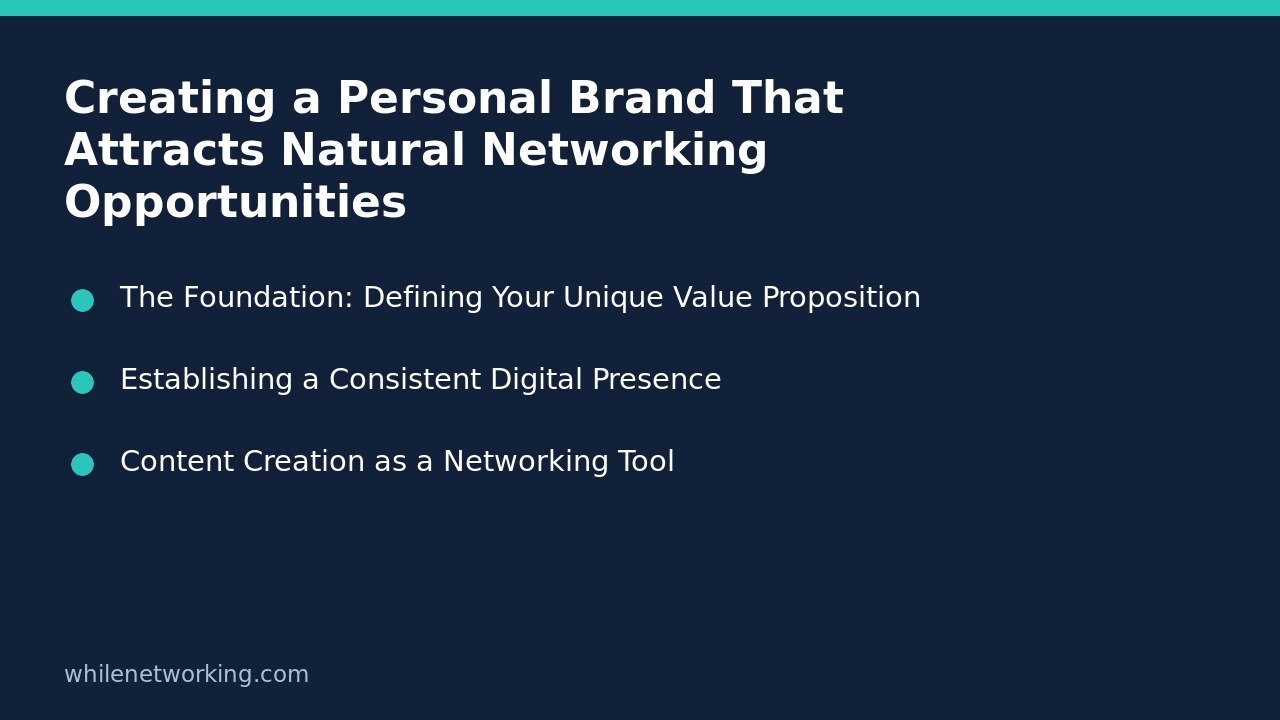
The Foundation: Defining Your Unique Value Proposition
Before you can attract others, you must clearly understand what makes you distinct in your field. A generic personal brand blends into the background; a strong one stands out. Your Unique Value Proposition (UVP) is not just your job title or years of experience; it is the specific problems you solve and the perspective you bring to them.
Start by identifying your core strengths. Are you the person who simplifies complex technical concepts? Do you specialize in crisis management for small businesses, or perhaps you are known for mentorship in emerging technologies? Write down three specific areas where others have successfully sought your advice. This list forms the backbone of your brand narrative. For instance, a software engineer might define their UVP not as “coding,” but as “building scalable cloud architectures that reduce operational costs by 30%.”
Once you have identified these strengths, articulate them in a way that is easy for others to understand. Avoid jargon unless it is industry-standard. Your goal is to create a mental hook that allows people to instantly categorize you when they hear your name or read your bio. This clarity reduces the friction in networking conversations, allowing interactions to start deeper immediately rather than spending time figuring out who you are.
Establishing a Consistent Digital Presence
Your digital footprint serves as the 24/7 receptionist for your personal brand. Whether it is LinkedIn, Twitter/X, GitHub, or a personal website, consistency across platforms reinforces your message. Inconsistency confuses potential connections; if your profile on one platform says you are a data analyst while another claims you are a creative writer, you lose credibility.
Audit your current profiles. Ensure that your headline, summary, and featured projects tell a cohesive story. Use keywords relevant to your field naturally so that when recruiters or peers search for those terms, your profile appears in the results. However, do not stuff keywords unnaturally; focus on readability and human connection. Include links to your best work, such as case studies, open-source contributions, or published articles.
Visual consistency also plays a role. Use the same professional headshot across all platforms. This creates an immediate sense of familiarity when someone encounters your name in different contexts. A recognizable face helps humanize the digital interaction, making it more likely that a viewer will take the next step to connect with you.
Content Creation as a Networking Tool
Sharing knowledge is one of the most powerful ways to build authority and attract networking opportunities. You do not need to be a prolific blogger or a viral video creator; consistent, high-quality contributions matter far more than volume. The goal is to demonstrate that you are engaged in your industry and care about the community’s growth.
Consider starting a newsletter, writing LinkedIn posts weekly, or contributing to niche forums. Share lessons learned from failures as much as successes; vulnerability builds trust. When you answer questions on platforms like Quora or Reddit with well-researched, detailed answers, you are performing “invisible networking.” You are solving problems for strangers who may later need your help directly.
For example, a cybersecurity professional might write a series of short posts explaining how to secure a home office against common phishing attacks. Readers who find this helpful will remember the author’s name and expertise. Over time, these readers become part of your network, not because they were added manually, but because they found value in your content first. This organic growth is sustainable and resilient against the changing algorithms of social media platforms.
The Art of Giving Before Asking
A personal brand that attracts opportunities is built on a foundation of generosity. This does not mean being a doormat or agreeing to every request; it means positioning yourself as a resource rather than a demand. When people perceive you as someone who lifts others up, they are eager to collaborate with you.
Identify gaps in your community’s knowledge and fill them. Offer to review a colleague’s resume, introduce two people who should know each other, or share a relevant article with a brief note on why it matters. These small acts accumulate into a reputation of reliability and kindness. In the tech industry, for instance, open-source contributors often gain significant traction not by marketing their projects, but by helping others debug code in forums or reviewing pull requests.
Remember that networking is a two-way street, but the flow of value should feel balanced over time, not necessarily in every single interaction. If you consistently provide insights, introductions, and support, people will remember you as a “giver.” When an opportunity arises for yourself, they are more likely to think of you first because their own success has benefited from your contributions.
Navigating Common Pitfalls in Brand Building
Even with the best intentions, there are common mistakes that can undermine a personal brand. One frequent error is over-polishing one’s image to the point of inauthenticity. If your online persona feels disconnected from your actual behavior in meetings or conversations, trust erodes quickly. People can detect dissonance between what you say and how you act.
Another pitfall is neglecting negative feedback or criticism. A strong personal brand owns its mistakes and shows a commitment to improvement. When errors occur, address them transparently rather than hiding behind corporate speak. Additionally, avoid the temptation to chase trends blindly. Just because everyone is talking about a specific technology or buzzword does not mean you must force your own expertise into that niche if it does not align with your core strengths.
Finally, do not ignore the importance of offline interaction. A digital brand without real-world validation is fragile. Attend local meetups, join professional associations, and engage in face-to-face discussions. The warmth of human interaction adds a layer of depth that text alone cannot achieve. Integrating your digital strategy with physical presence ensures your brand remains grounded and authentic.
Conclusion: Letting Opportunities Arrive Naturally
Creating a personal brand is a long-term investment in your professional life. It requires patience, consistency, and a genuine desire to contribute to your field. By defining your unique value, maintaining a consistent digital presence, sharing knowledge generously, and avoiding common pitfalls, you create an environment where networking opportunities arise naturally.
When your reputation precedes you, the anxiety of “how do I get the next meeting” diminishes. Instead, you find yourself invited to speak at events, approached by recruiters, or asked to collaborate on projects because people trust what you have built online and offline. This shift from active hunting to passive attracting is the hallmark of a mature personal brand.
Remember that terms, availability, eligibility, laws, and prices regarding professional services always depend on the specific insurer, policy, jurisdiction, and individual circumstances. Similarly, in the realm of personal branding, there are no guaranteed formulas for success; results vary based on industry trends and personal execution. Focus on building something real and useful, and let the opportunities follow the quality of your work.