
Many professionals view small talk as a necessary evil, a tedious hurdle to clear before reaching the “real” business discussion. However, in the modern networking landscape, skipping this phase is often a strategic error. Small talk is not merely about filling silence; it is the critical mechanism for establishing psychological safety and rapport. When done correctly, a conversation about the weather or a shared commute can evolve into a high-value professional relationship within minutes. The key lies in understanding that people connect with people, not resumes. By mastering the transition from casual chat to meaningful engagement, you transform fleeting interactions into lasting business connections.
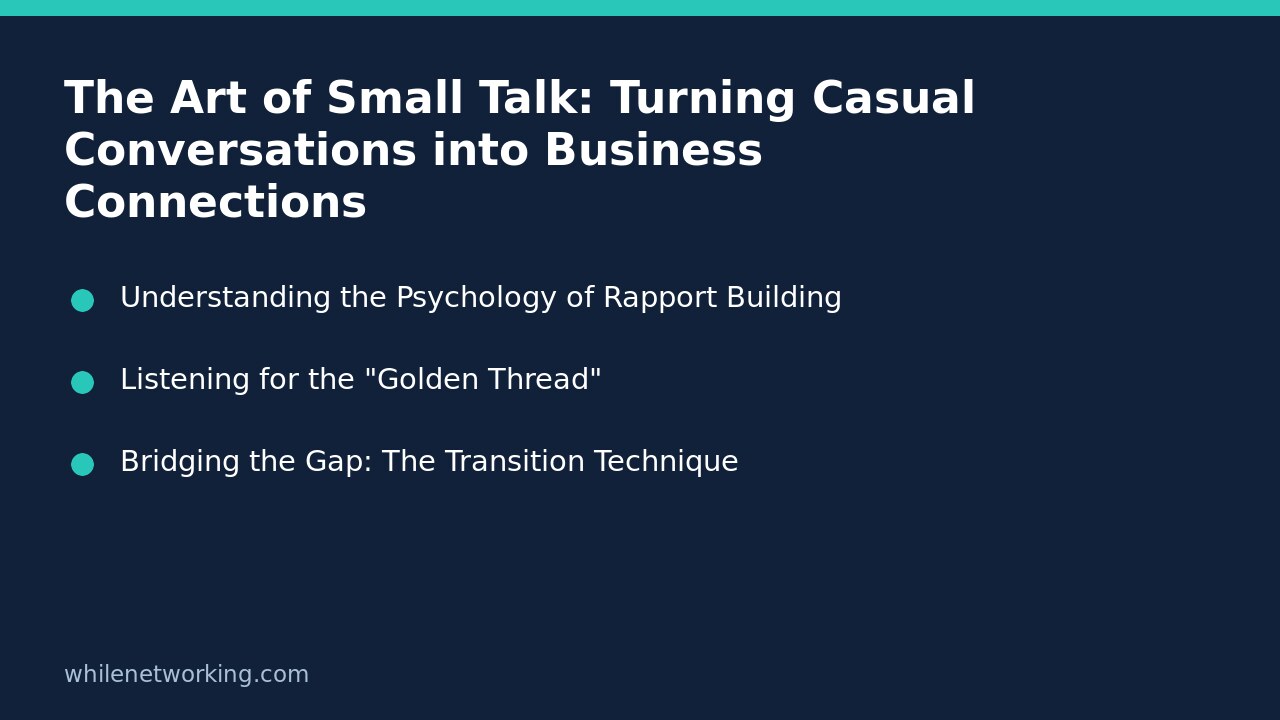
Understanding the Psychology of Rapport Building
Before diving into techniques, it is essential to understand why small talk works. Psychologically, humans are tribal creatures who rely on social cues to determine if another person is safe and trustworthy. In a networking event, attendees are often guarded, scanning the room for threats or opportunities. A warm, engaging conversation signals that you are not there to steal an idea or sell aggressively; you are there to connect as a human being.
This initial layer of trust lowers defenses, making the other person more receptive to your value proposition later in the interaction. If you jump straight to asking “What do you do?” and then immediately pitching a solution, you bypass this crucial step. The goal of small talk is to create a shared context—a common ground where both parties feel comfortable. This shared context acts as the foundation upon which specific business interests can be built without feeling transactional or forced.
Listening for the “Golden Thread”
The most effective way to turn casual conversation into business dialogue is active listening with a specific intent. Most people listen to respond; effective networkers listen to find the “golden thread.” This is a subtle detail, a hobby, or a challenge mentioned in passing that reveals a deeper interest or pain point.
For example, if someone mentions they are struggling to find time for their creative projects while working full-time, that is not just a complaint about scheduling; it is a potential connection point regarding productivity tools, freelance management, or work-life balance consulting. To execute this:
1. Ignore the resume: Do not lead with your job title unless asked.
2. Ask open-ended questions: Instead of “Do you like your job?”, ask “What is the most exciting part of your current role?”
3. Connect the dots: If they mention a specific industry challenge, briefly share a relevant insight or ask how they are currently navigating it.
This approach shifts the dynamic from an interrogation to a collaborative exploration. It shows genuine curiosity, which is highly attractive in professional settings. Remember that terms, availability, and eligibility for any specific services you might offer depend on the individual’s unique situation and jurisdiction; never assume their needs match your offerings without verification.
Bridging the Gap: The Transition Technique
One of the most common mistakes in networking is staying stuck in small talk or abruptly ending it. The art lies in the seamless transition. You must recognize when a casual topic has evolved into a substantive one. This usually happens when the conversation moves from general observations to personal challenges, industry trends, or specific interests.
To bridge this gap, use a “pivot sentence.” A pivot sentence acknowledges the current topic while introducing a more serious element. For instance:
* Casual: “It’s quite hot in here today, isn’t it?”
* Pivot: “Speaking of heat, I read an article about how rising temperatures are affecting energy costs in our region. Is your company seeing similar shifts in utility pricing?”
This technique validates the small talk while smoothly steering toward business relevance. It respects the other person’s conversational flow rather than hijacking it. Security considerations also apply here; ensure that once you move to sensitive business topics, you maintain appropriate boundaries regarding data privacy and do not share confidential information prematurely.
Navigating Common Pitfalls in Networking Conversations
Even with good intentions, many professionals stumble into traps that ruin networking opportunities. One frequent error is dominating the conversation. If you are doing all the talking about your own achievements, you have missed the primary goal of networking: understanding the other person’s perspective. Another pitfall is being overly formal or stiff, which creates distance rather than closeness.
Additionally, avoid making assumptions based on first impressions. Just because someone works in finance does not mean they are only interested in financial products; they might be passionate about ethical investing or sustainable banking. Be wary of “resume dumping”—uninvited monologues about your career history. This often alienates the listener and wastes valuable time.
Finally, do not treat every interaction as a sales pitch. The goal is to exchange value, which can include introductions, information sharing, or simply being a supportive ear. If you approach every conversation with the intent to close a deal immediately, it becomes obvious and unappealing. Always explain that terms, availability, eligibility, laws, and prices depend on the insurer, policy, and jurisdiction before making specific offers.
Real-World Example: From Coffee Cup to Partnership
Consider a scenario at a local tech conference. You strike up a conversation with a marketing director who mentions they are struggling to integrate new AI tools into their legacy workflow without disrupting team morale. Initially, this is small talk about the event venue and coffee. You listen actively and ask follow-up questions about their specific challenges with integration.
Recognizing the “golden thread,” you pivot the conversation by sharing a brief case study (without fabricating statistics) of how your organization approached similar integration issues, focusing on change management rather than just software features. You ask if they have explored specific training programs or pilot projects that could mitigate risk. The conversation naturally evolves into a discussion about potential collaboration. By the end of the meeting, you have not sold them anything directly; instead, you have established a relationship where they feel understood and supported. Later, you might send a personalized message referencing your chat, offering to connect them with a colleague who specializes in legacy system upgrades. This is the power of turning casual moments into structured value exchanges.
Conclusion: Making Every Interaction Count
Mastering small talk is a skill that improves with practice and mindfulness. It requires shifting focus from “What do I say next?” to “What does this person care about?” By building genuine rapport, listening for deeper needs, and executing smooth transitions, you can transform any casual encounter into a meaningful business connection. Remember that networking is a long-term investment in your professional ecosystem, not a series of one-off transactions. Whether you are attending an industry gala or chatting at a coffee shop, approach every interaction with authenticity and curiosity. Ultimately, the strongest business relationships are built on trust, and trust begins with the simple act of connecting as humans before discussing business.