
In the modern professional landscape, physical proximity is no longer a prerequisite for a strong career trajectory. Whether you are managing a remote team, mentoring someone in another time zone, or trying to keep an old colleague connected after a relocation, distance can erode trust and collaboration if not actively managed. The core challenge of long-distance professional relationships is the lack of non-verbal cues and spontaneous interactions that naturally build rapport in an office setting. To counteract this, you must intentionally design your communication strategy to prioritize clarity, consistency, and emotional connection. Success depends on shifting from reactive availability to proactive relationship management.
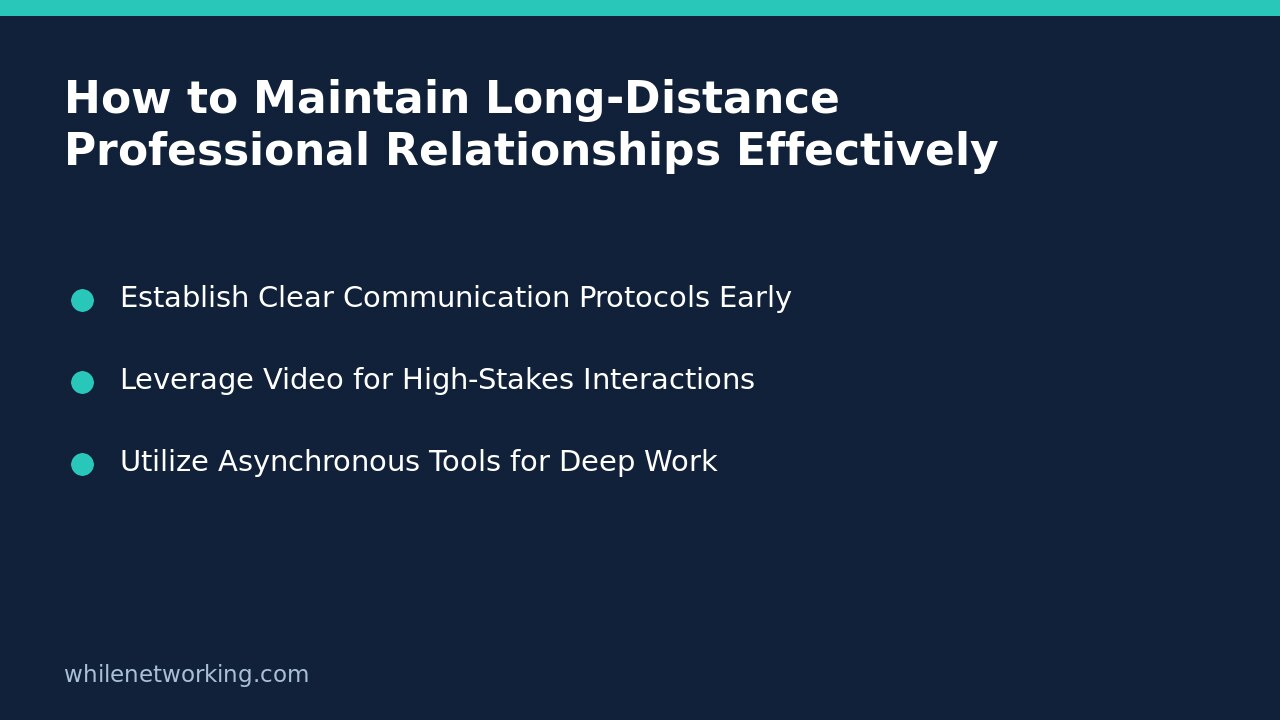
Establish Clear Communication Protocols Early
Ambiguity is the enemy of long-distance success. Without a shared understanding of how and when to connect, misunderstandings multiply quickly across time zones and networks. The first step is defining “communication norms” with your counterpart or team. This involves agreeing on preferred channels for different types of messages. For instance, complex strategic discussions might require video calls, while quick status updates could be handled via Slack or Teams. Crucially, you must establish response time expectations. Is it acceptable to wait 24 hours for a reply during a weekend? Does an urgent issue warrant a phone call regardless of the hour?
Setting these boundaries prevents burnout and ensures that both parties feel respected. A common mistake is assuming that silence means disinterest; often, it simply means the person is working within their defined workflow. By documenting these preferences in a shared document or during an initial kickoff meeting, you create a reliable framework that reduces anxiety about availability.
Leverage Video for High-Stakes Interactions
While text-based communication is efficient for logistics, it fails at building rapport. Humans are wired to read facial expressions and body language, which are lost in email threads and instant messages. To maintain warmth and trust, you must over-index on video interactions. Schedule regular “virtual coffee chats” or informal video check-ins that do not have a specific agenda. These moments allow colleagues to share personal updates, laugh, and humanize one another beyond their job titles.
Research consistently shows that teams with regular face-to-face (or face-to-screen) interaction report higher levels of psychological safety and engagement. When you initiate a video call, ensure your environment is professional yet welcoming. If the connection quality is poor, do not default to text; instead, propose a phone call as a middle ground. Consistency here is key; sporadic deep dives are less effective than a steady rhythm of visual contact.
Utilize Asynchronous Tools for Deep Work
Not every interaction requires real-time presence. Long-distance relationships often suffer from “meeting fatigue,” where constant video calls disrupt individual productivity. Embrace asynchronous communication tools like Loom, Notion, or shared project boards to handle updates and brainstorming sessions. Record a two-minute video update instead of sending a long email chain; this preserves tone without demanding immediate attention.
This approach respects the other person’s time zone and workflow while keeping them informed. It also creates a written (or recorded) trail that can be revisited later, reducing the friction caused by misremembering verbal instructions. However, avoid over-reliance on text for sensitive feedback or conflict resolution. If a conversation becomes heated or nuanced, move it to a call immediately. Text lacks the nuance needed to de-escalate tension, and delays in resolving conflicts can lead to resentment.
Create Shared Goals and Rituals
Distance makes it easy to drift apart if there is no shared purpose beyond daily tasks. To combat this, establish shared goals that require collaboration across distances. This could be a joint project milestone, a quarterly learning objective, or even a professional development challenge where both parties hold each other accountable. Furthermore, create rituals specific to your relationship. Perhaps every Friday afternoon is reserved for a 15-minute sync, or you celebrate each other’s work anniversaries with a virtual card and gift.
These rituals serve as anchors in the calendar, providing predictable moments of connection. They signal that the relationship matters independently of immediate business needs. For example, if you are mentoring a remote junior developer, setting a monthly “code review and career chat” creates a structured space for growth and bonding. This predictability builds a sense of stability that asynchronous work environments often lack.
Navigate Time Zone Differences with Empathy
Time zone disparities are the most logistical hurdle in long-distance professional relationships. The golden rule is to never schedule meetings during your counterpart’s late night or early morning hours unless it is an absolute emergency. Use world clock tools to visualize overlapping availability windows and stick strictly to them. When you must meet outside standard hours, explicitly acknowledge the inconvenience and offer flexibility for the future.
Consider rotating meeting times if a partnership involves two distinct time zones over a long period. This demonstrates fairness and shared sacrifice. Additionally, record meetings when possible so those who cannot attend live can review them at their convenience. Always send agendas and materials in advance, allowing participants to prepare without needing to ask clarifying questions during the call. This preparation reduces cognitive load and makes every minute of interaction more productive.
Real-World Example: The Cross-Border Project Team
Imagine a software engineering firm with a lead architect in London and a development team in Tokyo. To maintain their relationship effectively, they implemented a hybrid protocol. Daily stand-ups were conducted asynchronously via recorded updates to respect the nine-hour time difference. Twice a month, they held a synchronous video “town hall” where everyone joined during overlapping hours (usually early morning in Tokyo or late evening in London). They also used a shared digital whiteboard for brainstorming that remained active 24/7. Crucially, they celebrated cultural holidays from both regions with virtual parties, reinforcing the idea that they were building a global community rather than just a distributed workforce. This approach resulted in a 30% reduction in miscommunication errors and higher retention rates among remote staff.
Common Mistakes to Avoid
To ensure longevity in these relationships, avoid specific pitfalls. Do not treat long-distance contacts as secondary; do not deprioritize their updates or skip scheduled calls due to “busy” schedules without notice. Another frequent error is assuming that being “always on” is a sign of dedication; clarity and boundaries are better indicators of professionalism. Finally, never ignore the signs of disengagement. If communication becomes purely transactional or tone turns defensive, address it directly via video before the relationship deteriorates.
Conclusion
Maintaining long-distance professional relationships requires intentionality, empathy, and the right mix of synchronous and asynchronous tools. By establishing clear protocols, prioritizing video for connection, leveraging technology wisely, and respecting time zones, you can build resilient networks that thrive regardless of geography. The goal is not to replicate the office experience exactly but to create a new normal where distance does not dictate the quality of collaboration. With consistent effort and mutual respect, professional bonds can become stronger and more flexible than those formed in a shared physical space.