
For solopreneurs and freelancers, LinkedIn is often mistaken for a digital resume rather than a dynamic networking engine. The platform’s algorithm favors engagement and relationship building over simple broadcasting. If you are struggling to convert profile views into paid projects or meaningful collaborations, the issue usually lies in how you approach connection requests and content strategy. Success on this platform requires shifting from a “spray and pray” mentality of sending generic messages to a targeted approach that provides immediate value to your potential network.
The core challenge for independent professionals is standing out in a sea of corporate profiles and automated sales pitches. To thrive, you must position yourself as an authority in your niche while remaining accessible. This involves curating a profile that speaks directly to client pain points and engaging in conversations rather than monologues. By treating LinkedIn as a community hub where you listen more than you talk, you build the trust necessary for high-ticket freelance work.
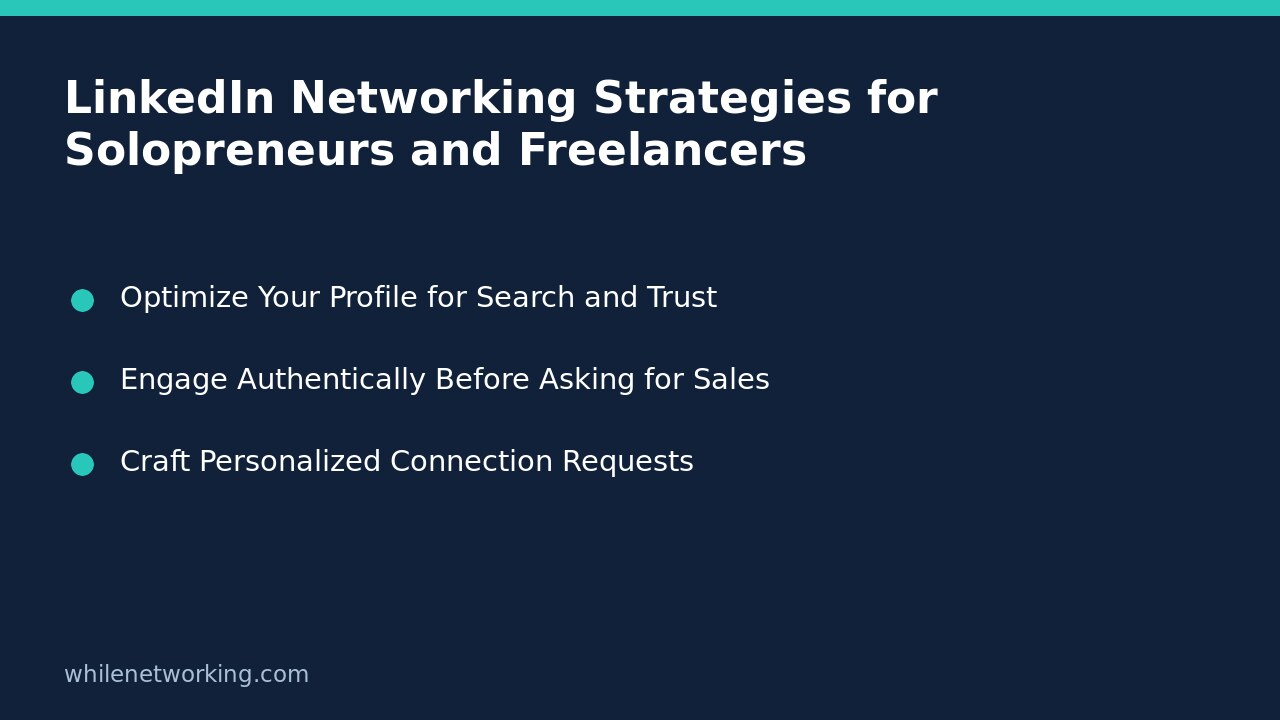
Optimize Your Profile for Search and Trust
Before reaching out to anyone, your own digital storefront must be robust. Many freelancers neglect their “About” section, resulting in generic statements like “I am a professional looking for opportunities.” Instead, write a headline that includes specific keywords clients search for, such as “Content Strategist for SaaS Startups” or “UX Designer specializing in FinTech.”
Your summary should not just list your skills; it must tell a story about the problems you solve. Use bullet points to highlight specific achievements, such as “Increased client conversion rates by 20% using A/B testing.” Visuals matter, too. Use a high-resolution headshot with a professional background and select a banner image that reflects your brand identity or industry expertise. Ensure your contact information is clearly visible, preferably linking directly to a portfolio or booking page, rather than just an email address which can look less professional.
Engage Authentically Before Asking for Sales
The most common mistake freelancers make is immediately asking for work after connecting with someone. This triggers defensiveness and often leads to ignored messages. Instead, adopt a strategy of “warm-up” engagement. Spend 15 minutes daily reading and commenting on posts by your ideal clients and industry peers.
When commenting, avoid generic phrases like “Great post.” Provide value by adding a unique perspective, sharing a relevant statistic, or asking a thoughtful question that extends the conversation. For example, if a post discusses the challenges of remote work, you might comment with a brief anecdote about how your team handles asynchronous communication. This establishes you as a knowledgeable peer before you ever pitch your services. Consistency here builds social proof; when a potential client sees you engaging thoughtfully with others, they are more likely to trust your expertise.
Craft Personalized Connection Requests
LinkedIn allows for a brief note when sending a connection request. Do not leave this blank or use default text like “I’d like to join your LinkedIn group.” Instead, write a two-sentence message that references something specific about the person’s profile or recent activity. Mention how their work aligns with yours or why you found their content interesting.
For instance, if you notice they recently published an article on industry trends, mention that specifically: “Hi [Name], I just read your article on AI in marketing and found your point about customer data privacy particularly insightful. I’m a freelance copywriter specializing in compliance-focused messaging.” This demonstrates genuine interest rather than opportunism. Keep the tone conversational and professional, avoiding excessive flattery or jargon.
Leverage LinkedIn Groups and Events for Community Building
While individual posts are important, joining niche communities can accelerate your networking efforts. Identify LinkedIn Groups relevant to your industry, such as “Freelance Writers Network” or “SaaS Marketing Leaders.” Do not join groups just to spam; participate actively by answering questions in the feed and sharing useful resources.
Groups often host events and webinars where you can meet peers directly. Attend these virtual gatherings to expand your circle beyond your immediate geographic location. In these settings, focus on building relationships with other freelancers who might become collaborators or referral sources. A network of fellow solopreneurs can provide support during dry spells and offer cross-promotion opportunities that are more sustainable than chasing new clients every day.
Turn Connections into Conversations and Opportunities
Once you have a connection, the goal is to move from a static link to an active conversation. If someone shares a post or updates their profile, send a polite message within 24 hours. Keep it light: “Saw your update on the new project launch, congratulations! How did the team handle the rollout?” This keeps the interaction alive without being intrusive.
Over time, these conversations can naturally evolve into business inquiries. If you have been engaging with someone’s content for a few weeks and they frequently ask questions related to your expertise, it is an appropriate time to introduce yourself as a potential resource. Share a relevant case study or offer a free mini-audit as a way to demonstrate value before asking for a commitment. This low-pressure approach respects the recipient’s autonomy and increases the likelihood of a positive response.
Common Mistakes to Avoid
To maintain the integrity of your network, avoid several pitfalls that can damage your reputation. Never sell in the first message; this is the number one reason connection requests are ignored or rejected. Do not use automated tools to send mass messages, as LinkedIn’s algorithm will flag and potentially restrict your account for spammy behavior.
Another mistake is being overly aggressive in following up. If a potential client does not reply to your pitch, respect their silence and move on rather than sending multiple follow-ups that feel like harassment. Additionally, avoid posting controversial political or personal opinions that could alienate your professional audience. Stick to industry topics, educational content, and behind-the-scenes glimpses of your work process to maintain a professional yet human brand image.
Conclusion
Building a successful freelance career on LinkedIn requires patience, consistency, and a genuine desire to help others. By optimizing your profile for search, engaging authentically with your audience, crafting personalized connection requests, and participating in industry communities, you can transform the platform into a reliable source of high-quality leads. Remember that networking is a long-term investment; the connections you build today may yield significant results months or years down the line. Focus on providing value first, and the business opportunities will follow naturally.