
What Is A Router is a core networking topic for IT beginners, help desk staff, junior system administrators, and anyone learning practical troubleshooting. This guide explains the topic in simple language and shows how it applies in real home and office networks.
- You will learn the concept in plain English
- You will see common IT support examples
- You will get useful commands for practice
- You will learn safe troubleshooting habits
What is a router?
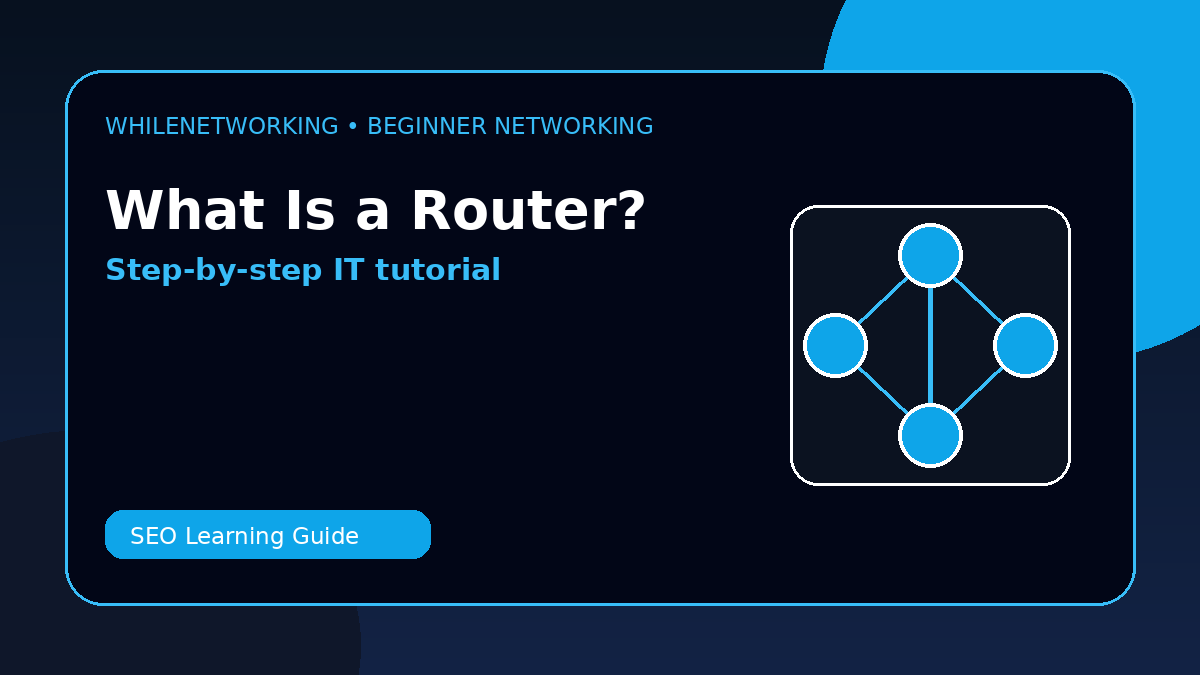
A router is a network device that connects different networks together. In a home or small office, the router usually connects your local devices to the internet.
What does a router do?
A router forwards traffic between networks, gives devices a path to the internet, often provides Wi-Fi, and may also handle DHCP, NAT, firewall rules, and basic security.
Router vs modem
A modem connects your home or office to the internet service provider. A router shares that connection with multiple devices and manages local network traffic.
Why IT beginners should understand routers
Many common support issues involve routers, including no internet, wrong gateway, Wi-Fi problems, slow browsing, port forwarding, and VPN connection problems.
Simple troubleshooting tip
If many devices cannot access the internet, check router power, WAN status, gateway settings, DNS, and ISP status before troubleshooting only one laptop.
Useful commands for beginners
ipconfig /all
ping 192.168.1.1
tracert 8.8.8.8
netsh wlan show interfaces
Quick troubleshooting checklist
- Write down the exact error message or symptom.
- Check whether the issue affects one device, one user, or many users.
- Verify cable, Wi-Fi, IP address, gateway, DNS, and firewall status.
- Test one layer at a time: device, local network, gateway, DNS, and internet.
- Make one change at a time and document the result.
Final thoughts
Networking skills improve with practice. Start with simple checks, learn the meaning of each command, and build confidence step by step.
Educational note: This tutorial is for learning purposes only. Test carefully and do not make changes to production networks without approval, documentation, and backups.