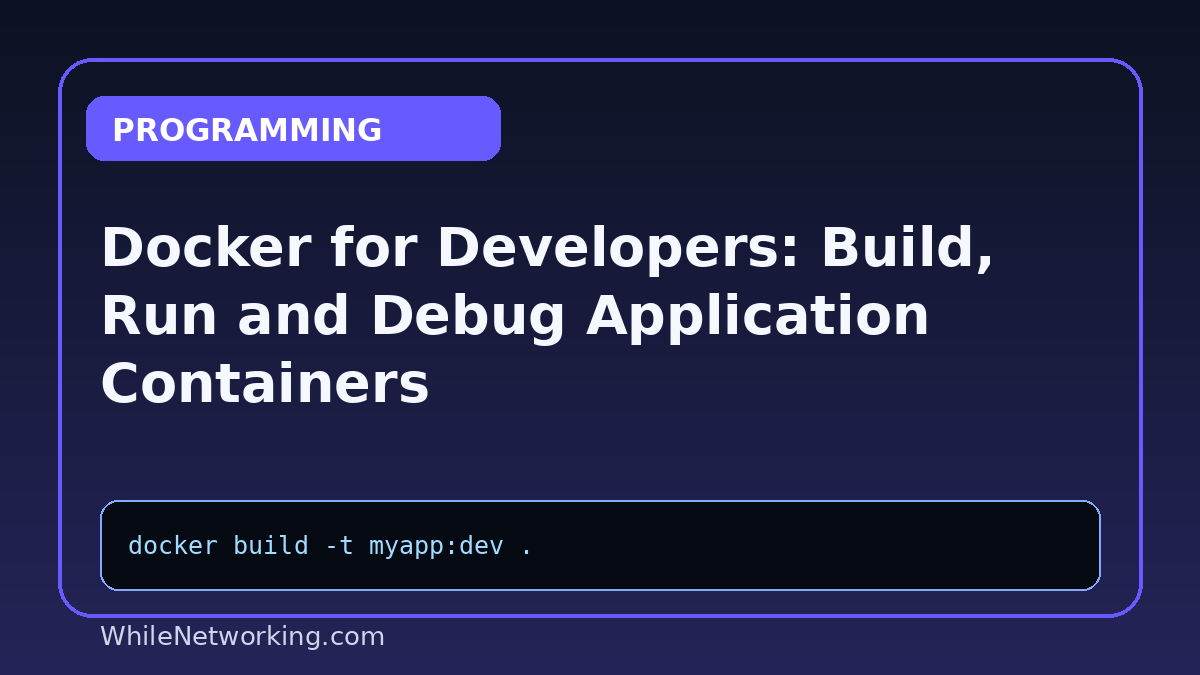

A medium-level Docker guide for developers covering images, containers, environment variables, logs and common debugging commands. This tutorial is written for medium-level readers who already understand basic programming concepts and now want more practical, production-ready habits.
Who this guide is for
This guide is suitable for developers, IT professionals, DevOps learners and support engineers who work with real applications, APIs, databases, containers or deployment pipelines.
Why this topic matters
Programming knowledge becomes more valuable when it is connected to reliability, troubleshooting, security and maintainability. The goal is not only to write code that works once, but to build software that can be monitored, debugged and improved over time.
Key concepts to understand
- Understand image vs container
- Pass configuration safely
- Inspect logs and running processes
- Debug port mapping problems
- Keep Dockerfiles small and predictable
Practical examples and commands
The following examples are starting points. Adjust names, paths, frameworks and environments for your own project.
docker build -t myapp:dev .docker run --rm -p 8080:8080 myapp:devdocker psdocker logs container_namedocker exec -it container_name sh
Recommended workflow
- Start by defining the exact problem or improvement goal.
- Check the current behavior with logs, tests, metrics or a small reproducible example.
- Make a focused change instead of changing many things at once.
- Verify the result with automated tests and manual checks where needed.
- Document the decision so future developers understand why it was done.
Common mistakes to avoid
- Hardcoding values that should be configuration.
- Ignoring error cases because the happy path works.
- Writing code without tests or without a clear rollback plan.
- Logging sensitive information such as passwords, tokens or private customer data.
- Optimizing before measuring the real bottleneck.
Best practices for production-ready code
- Keep functions small and responsibilities clear.
- Use meaningful names for variables, functions and modules.
- Prefer explicit error handling and actionable log messages.
- Review security, performance and maintainability before merging.
- Automate repeatable checks with tests, linters or CI pipelines.
FAQ
Is this beginner or advanced?
This is a medium-level guide. It assumes basic programming knowledge but explains practical patterns clearly.
Can these ideas apply to Python, JavaScript, Java, C# or PHP?
Yes. The exact syntax changes by language, but the engineering principles apply across most modern programming stacks.
How should I practice this topic?
Create a small demo project, intentionally introduce a problem, then apply the workflow in this tutorial to fix and document it.
Disclaimer: This tutorial is for educational purposes. Test all code and configuration carefully before using it in production. WhileNetworking is not responsible for misuse, damage, data loss or production issues.