
Default Gateway Explained is an important networking topic for IT support, help desk technicians, system administrators, and beginners preparing for real workplace troubleshooting. This guide explains it in simple language with practical examples.
- Understand the concept in plain English
- Recognize common real-world symptoms
- Use beginner-friendly troubleshooting commands
- Apply safe IT support best practices
What is a default gateway?
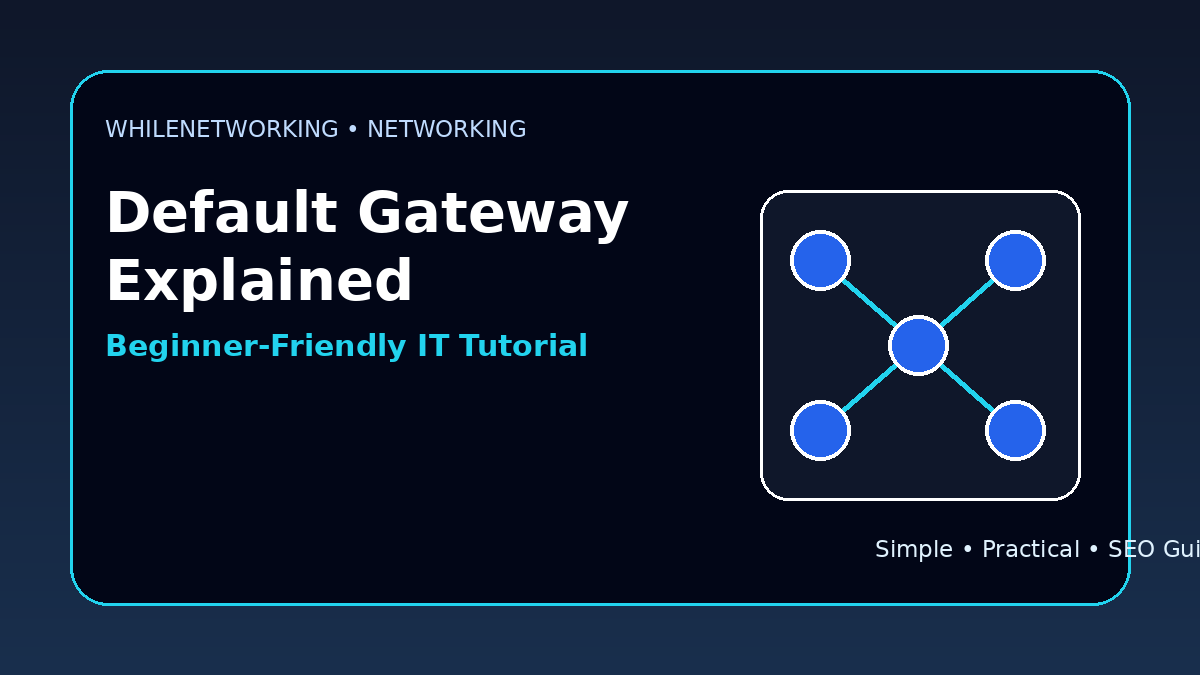
A default gateway is the router or Layer 3 device your computer uses to reach networks outside its own local network. In most homes and small offices, the default gateway is the router IP address.
Why the default gateway matters
Without the correct gateway, a device may talk to local devices but fail to access the internet, cloud apps, email, VPN, or remote servers.
Common gateway symptoms
Users may report connected but no internet, VPN not connecting, internal printer works but websites fail, or only local network access is available.
How to check the gateway
On Windows, run ipconfig /all. On Linux, run ip route. On macOS, check Network settings or run netstat -rn. Compare the gateway with the correct network design.
Troubleshooting tips
Ping the gateway first. If gateway ping fails, check Wi-Fi, cable, VLAN, adapter, subnet mask, DHCP, and router availability before blaming the internet provider.
Useful commands for practice
ipconfig /all
route print
ip route
ping 192.168.1.1
tracert 8.8.8.8
Beginner troubleshooting checklist
- Identify whether the issue affects one device, one network, or many users.
- Check IP address, subnet mask, default gateway, DNS, and physical connectivity.
- Test the local network before testing internet access.
- Record the command output before making changes.
- Make one change at a time, then test again.
Final thoughts
Networking is easier when you break the problem into small checks. Practice these concepts in a safe lab or home network before using them in production.
Educational note: This tutorial is for learning purposes only. Test carefully and do not make changes to production systems without approval, documentation, and backups.