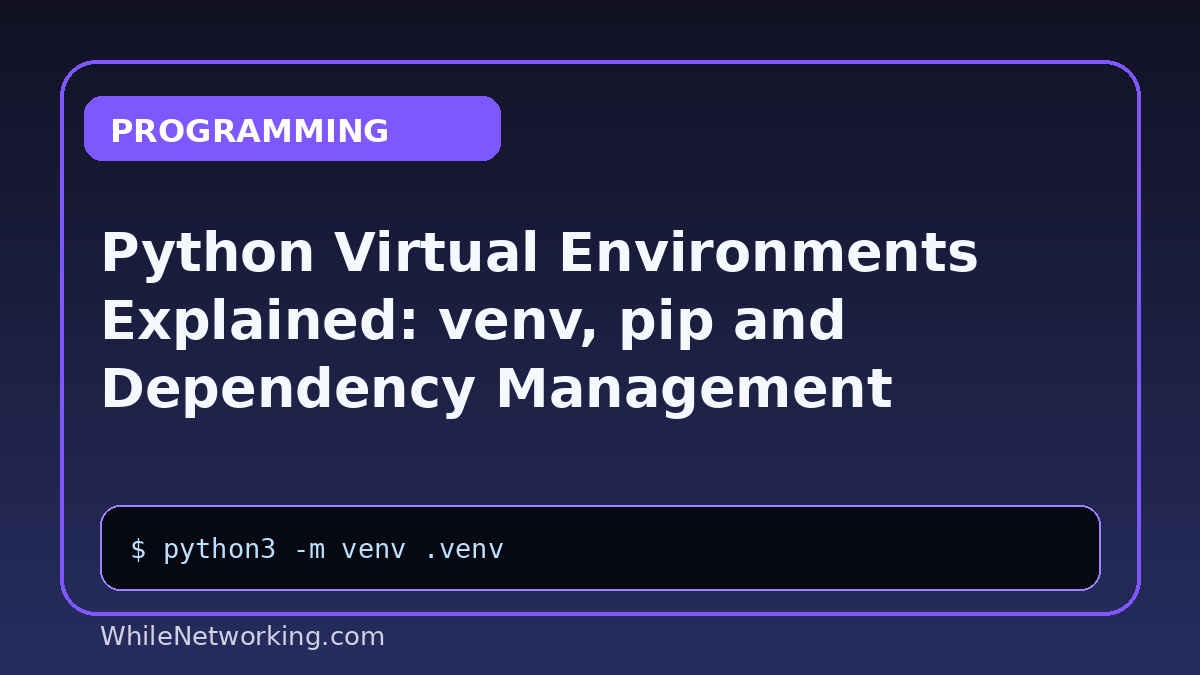

Learn how Python virtual environments isolate dependencies, prevent package conflicts and make IT automation projects easier to maintain. This medium-level tutorial is designed for IT professionals, junior developers, system administrators and technical support engineers who already understand basic computer concepts and want stronger programming skills.
What you will learn
- Why virtual environments matter
- Create and activate a venv
- Install and freeze dependencies
- Common venv troubleshooting
- Best practices for IT scripts
Why virtual environments matter
Virtual environments prevent one project from breaking another by isolating installed packages. This is especially important for IT automation, where one server may host many scripts with different dependency versions.
Create and activate a venv
A venv creates a local Python environment inside your project folder. After activation, package installs go into that environment instead of changing the system Python installation.
Install and freeze dependencies
Freezing dependencies creates a requirements file that helps another administrator rebuild the same environment. This makes scripts easier to move between laptops, jump boxes and servers.
Common venv troubleshooting
Most venv issues come from using the wrong Python interpreter, forgetting to activate the environment or mixing system-level packages with project-level packages.
Best practices for IT scripts
Keep each automation project in its own folder, commit requirements files to Git and document the command used to run the script.
Practical examples and commands
Use these examples as a starting point and adjust paths, URLs, table names and variables for your own environment.
python3 -m venv .venvsource .venv/bin/activatepython -m pip install requestspython -m pip freeze > requirements.txtdeactivate
Production checklist
- Test the code in a development or lab environment first.
- Keep secrets, tokens and passwords out of source code.
- Add logging so failures are easier to diagnose.
- Use version control before making important changes.
- Document assumptions, dependencies and rollback steps.
Common mistakes to avoid
- Skipping error handling because the script worked once.
- Hardcoding usernames, passwords, file paths or API tokens.
- Running code against production systems without a backup or approval.
- Ignoring dependency versions and environment differences.
FAQ
Is this suitable for complete beginners?
This article is aimed at medium-level readers. Beginners can still follow it, but should first understand basic commands, files and programming syntax.
Can IT support staff use these examples?
Yes. The examples focus on real IT tasks such as automation, API calls, reporting, troubleshooting and safe script maintenance.
Should I test before using this in production?
Yes. Always test carefully and review the impact before running code on live systems.
Disclaimer: This tutorial is for educational purposes. Test carefully before applying code or commands. WhileNetworking is not responsible for misuse, damage, data loss or production issues.