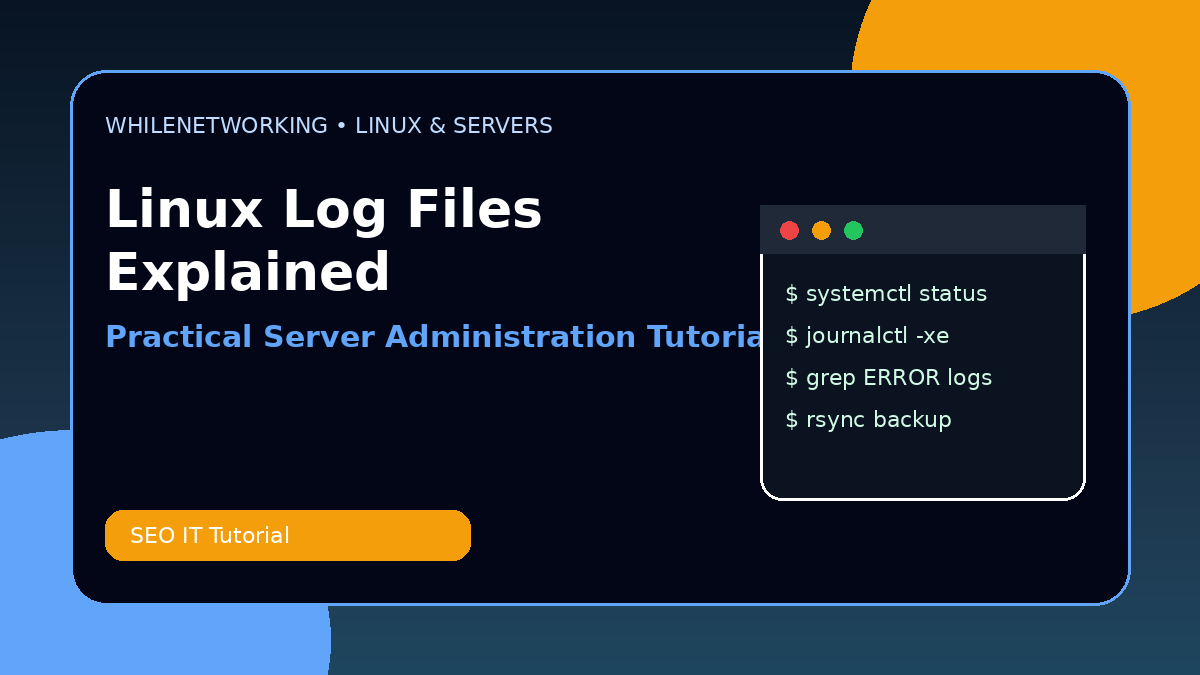

Linux Log Files Explained is a practical Linux and server administration skill for IT professionals, help desk teams, system administrators, DevOps learners, and technical support staff. This tutorial is written to be clear, searchable, and useful in real troubleshooting situations.
- Understand the server administration concept
- Learn common symptoms and mistakes
- Use practical Linux commands
- Apply safe troubleshooting and security habits
What Linux logs are
Linux logs record system events, service errors, authentication attempts, kernel messages, package activity, and application behavior. Logs help you troubleshoot with evidence instead of guessing.
Systemd journal vs text logs
Modern Linux systems often use systemd journal, viewed with journalctl. Many distributions also keep text logs under /var/log for compatibility and application-specific records.
Important log locations
Common files include /var/log/syslog, /var/log/auth.log, /var/log/kern.log, web server logs, database logs, and application logs.
How to read logs effectively
Filter by service, time, severity, or keyword. Look for repeated errors, permission problems, failed services, resource limits, and authentication failures.
Best practices
Do not ignore log growth. Configure log rotation, protect sensitive logs, and collect logs centrally for important servers.
Useful Linux commands
journalctl -xe
journalctl -u nginx --since "1 hour ago"
sudo tail -f /var/log/syslog
sudo grep -i error /var/log/syslog
sudo less /var/log/auth.log
Safe practice checklist
- Check the current state before changing configuration.
- Take backups of important files before editing.
- Test commands in a lab or non-production system first.
- Make one change at a time and verify the result.
- Document what changed and how to roll back.
Final thoughts
Linux server administration becomes easier when you follow a careful process: observe, verify, change safely, and document. Practice these commands regularly so they become part of your everyday troubleshooting toolkit.
Educational note: This tutorial is for learning purposes only. Test carefully and do not make production changes without approval, documentation, and backups.