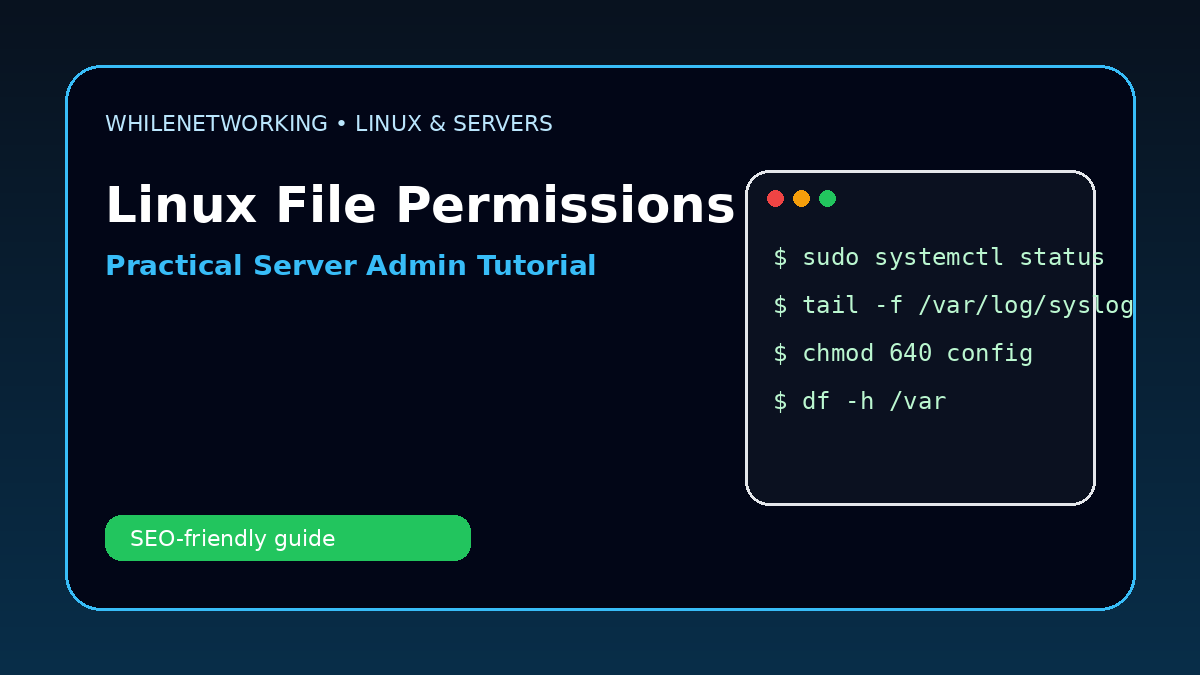

Linux File Permissions Chmod Chown Umask is a practical Linux and server administration topic for IT professionals who manage servers, troubleshoot incidents, support web applications, or maintain internal infrastructure. This tutorial explains the concept with clear examples and safe commands.
- Clear explanation for IT and server admins
- Real-world troubleshooting use cases
- Useful Linux commands and examples
- Safety notes for production environments
Why Linux permissions matter
Linux permissions control who can read, write, or execute files and directories. Misconfigured permissions can break applications, expose private data, or create security risks on servers.
Understanding read, write and execute
Read allows viewing content, write allows changing content, and execute allows running a file or entering a directory. These permissions are applied to user, group, and others.
Using chmod safely
The chmod command changes permissions. Numeric permissions such as 644, 755, and 600 are common, but you should understand what they mean before applying them recursively.
Using chown and groups
The chown command changes ownership. Correct ownership is important for web servers, scripts, logs, SSH keys, and application directories.
Understanding umask
Umask controls default permissions for newly created files and directories. It is useful when standardizing secure server environments.
Useful commands
ls -l
chmod 644 file.txt
chmod 755 script.sh
chown user:group file.txt
umask
Best practices
- Test commands in a safe lab before using them in production.
- Take backups before changing configuration files or permissions.
- Document what you changed and why.
- Use least privilege and avoid unnecessary root access.
- Review logs after every service or security change.
Final thoughts
Linux server administration becomes easier when you combine commands with a careful troubleshooting process. Practice these examples, understand the output, and build repeatable checklists for your environment.
Educational note: This tutorial is for learning purposes. Use caution on production systems and get approval before making changes.