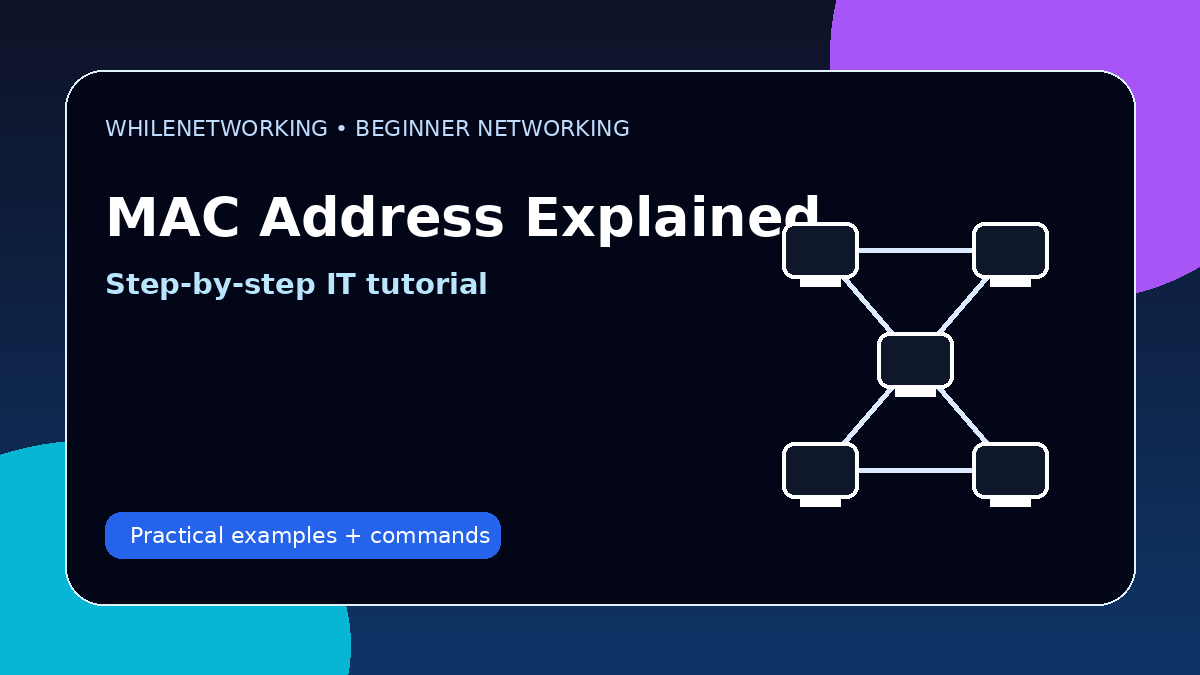

Mac Address Explained is a useful topic for help desk technicians, IT support beginners, network students, and anyone building practical networking skills. This tutorial explains the idea in plain English and shows how it appears in real IT work.
- You will learn the main concept in simple language
- You will see practical IT support examples
- You will get useful commands for practice
- You will learn safe troubleshooting habits
What is a MAC address?
A MAC address is a hardware identifier assigned to a network interface. It helps devices communicate inside a local network.
MAC address vs IP address
A MAC address identifies the network adapter on the local network. An IP address identifies where the device is located logically in an IP network.
Where MAC addresses are used
Switches use MAC addresses to forward frames. DHCP reservations, access control, Wi-Fi filtering, and asset tracking may also use MAC addresses.
How to find a MAC address
On Windows, use ipconfig /all. On Linux, use ip link or ip addr. On macOS, check network settings or use ifconfig.
Troubleshooting use case
If a device receives the wrong IP or a switch port shows the wrong device, checking the MAC address can help identify what is connected.
Useful commands for beginners
ipconfig /all
getmac
arp -a
ip link show
ifconfig
Quick beginner checklist
- Write down the exact problem and error message.
- Check whether one device or many devices are affected.
- Confirm IP address, gateway, DNS, cable or Wi-Fi status.
- Test one thing at a time and compare the result.
- Document your findings before escalating the issue.
Final thoughts
Beginner networking becomes easier when you understand the basic building blocks and follow a clear troubleshooting process. Practice these commands in a safe lab or home network before using them in production.
Educational note: This tutorial is for learning purposes. Test carefully and do not change production networks without permission, documentation, and backups.