
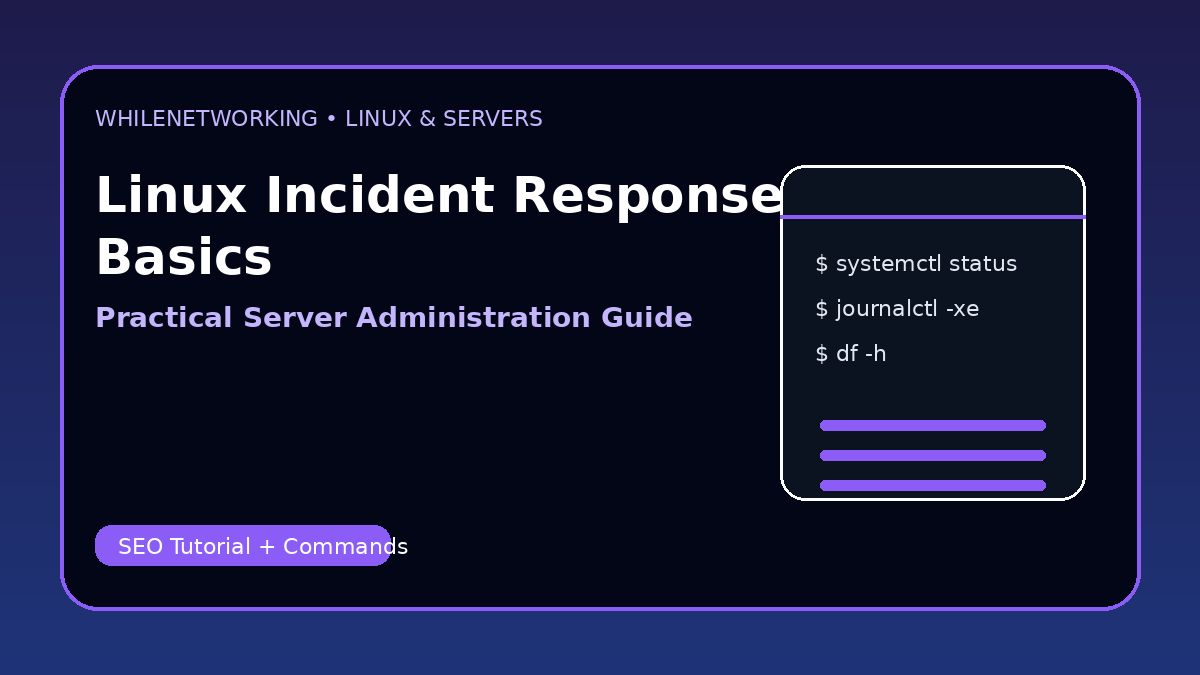

Linux Server Incident Response Basics is a practical topic for IT professionals, Linux administrators, help desk engineers, DevOps learners, and server support teams. This guide explains the concept with real commands and safe troubleshooting steps.
- Clear explanation for practical server work
- Common symptoms and use cases
- Useful commands for real troubleshooting
- Security and reliability best practices
Stay calm and collect facts
During an incident, guessing can make the problem worse. First identify what is broken, who is affected, when it started, and what changed recently.
Check the basics first
Review uptime, disk space, memory, CPU load, failed services, network connectivity, recent deployments, and system logs.
Protect evidence
If the issue may involve security, avoid deleting logs or rebooting immediately unless required for safety. Preserve evidence for investigation.
Communicate clearly
Tell stakeholders what is affected, what is being checked, and when the next update will come. Clear communication reduces pressure and confusion.
After recovery
Document root cause, timeline, fix, lessons learned, and prevention steps. A good post-incident review improves future reliability.
Useful Linux commands
uptime
df -h
free -h
systemctl --failed
journalctl -xe
Recommended admin checklist
- Confirm the affected server, service, user group, and timeline.
- Check logs before restarting services.
- Verify disk, CPU, memory, network, and service status.
- Document commands used and results found.
- Apply one change at a time and verify after every change.
Educational note: This tutorial is for learning purposes. Test carefully in a lab or approved environment before applying changes to production servers.

