
Understand a practical Git branching workflow for scripts, infrastructure files and web projects, including pull requests and merge conflict fixes. This medium-level tutorial is designed for IT professionals, junior developers, system administrators and technical support engineers who already understand basic computer concepts and want stronger programming skills.
What you will learn
- Why branches protect main code
- Create a feature branch
- Commit useful changes
- Resolve merge conflicts
- Pull request checklist
Why branches protect main code
Why branches protect main code is important because medium-level programming work requires repeatable habits, not just working code. Focus on understanding inputs, outputs, failure modes and how the code will be maintained by the next person.
Create a feature branch
Create a feature branch is important because medium-level programming work requires repeatable habits, not just working code. Focus on understanding inputs, outputs, failure modes and how the code will be maintained by the next person.
Commit useful changes
Commit useful changes is important because medium-level programming work requires repeatable habits, not just working code. Focus on understanding inputs, outputs, failure modes and how the code will be maintained by the next person.
Resolve merge conflicts
Resolve merge conflicts is important because medium-level programming work requires repeatable habits, not just working code. Focus on understanding inputs, outputs, failure modes and how the code will be maintained by the next person.
Pull request checklist
Pull request checklist is important because medium-level programming work requires repeatable habits, not just working code. Focus on understanding inputs, outputs, failure modes and how the code will be maintained by the next person.
Practical examples and commands
Use these examples as a starting point and adjust paths, URLs, table names and variables for your own environment.
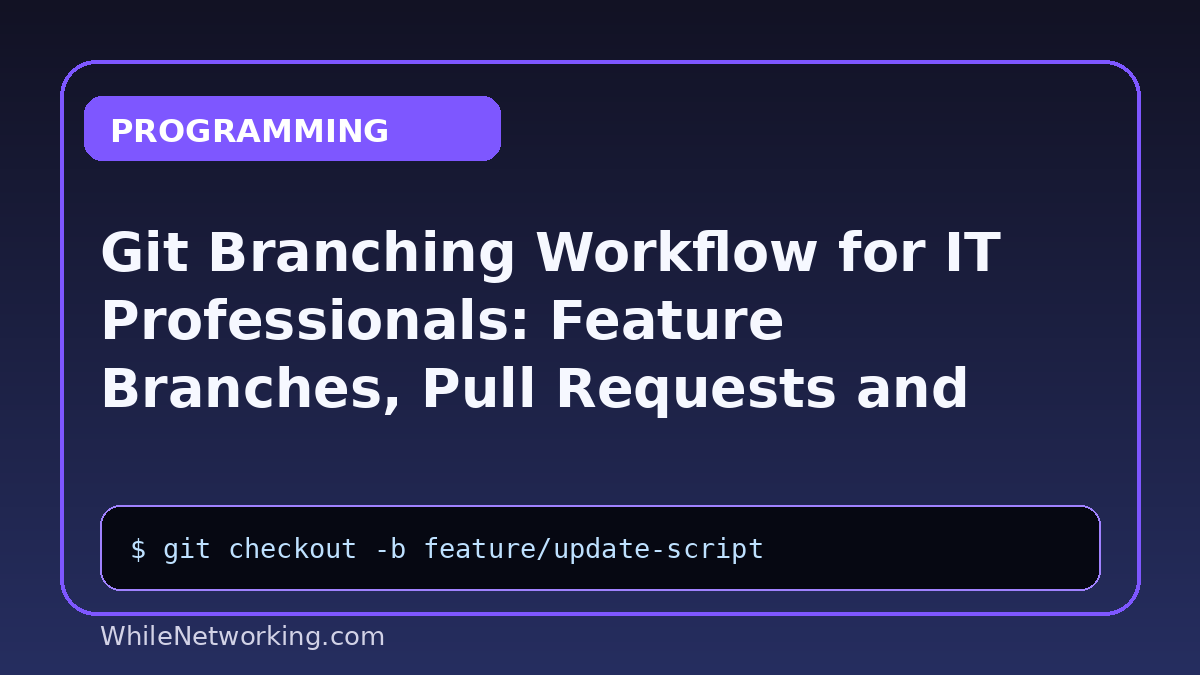
git checkout -b feature/update-scriptgit statusgit add . && git commit -m "Update script"git pull --rebase origin maingit merge main
Production checklist
- Test the code in a development or lab environment first.
- Keep secrets, tokens and passwords out of source code.
- Add logging so failures are easier to diagnose.
- Use version control before making important changes.
- Document assumptions, dependencies and rollback steps.
Common mistakes to avoid
- Skipping error handling because the script worked once.
- Hardcoding usernames, passwords, file paths or API tokens.
- Running code against production systems without a backup or approval.
- Ignoring dependency versions and environment differences.
FAQ
Is this suitable for complete beginners?
This article is aimed at medium-level readers. Beginners can still follow it, but should first understand basic commands, files and programming syntax.
Can IT support staff use these examples?
Yes. The examples focus on real IT tasks such as automation, API calls, reporting, troubleshooting and safe script maintenance.
Should I test before using this in production?
Yes. Always test carefully and review the impact before running code on live systems.
Disclaimer: This tutorial is for educational purposes. Test carefully before applying code or commands. WhileNetworking is not responsible for misuse, damage, data loss or production issues.