
Basic Network Topology Explained is a useful topic for help desk technicians, IT support beginners, network students, and anyone building practical networking skills. This tutorial explains the idea in plain English and shows how it appears in real IT work.
- You will learn the main concept in simple language
- You will see practical IT support examples
- You will get useful commands for practice
- You will learn safe troubleshooting habits
What is network topology?
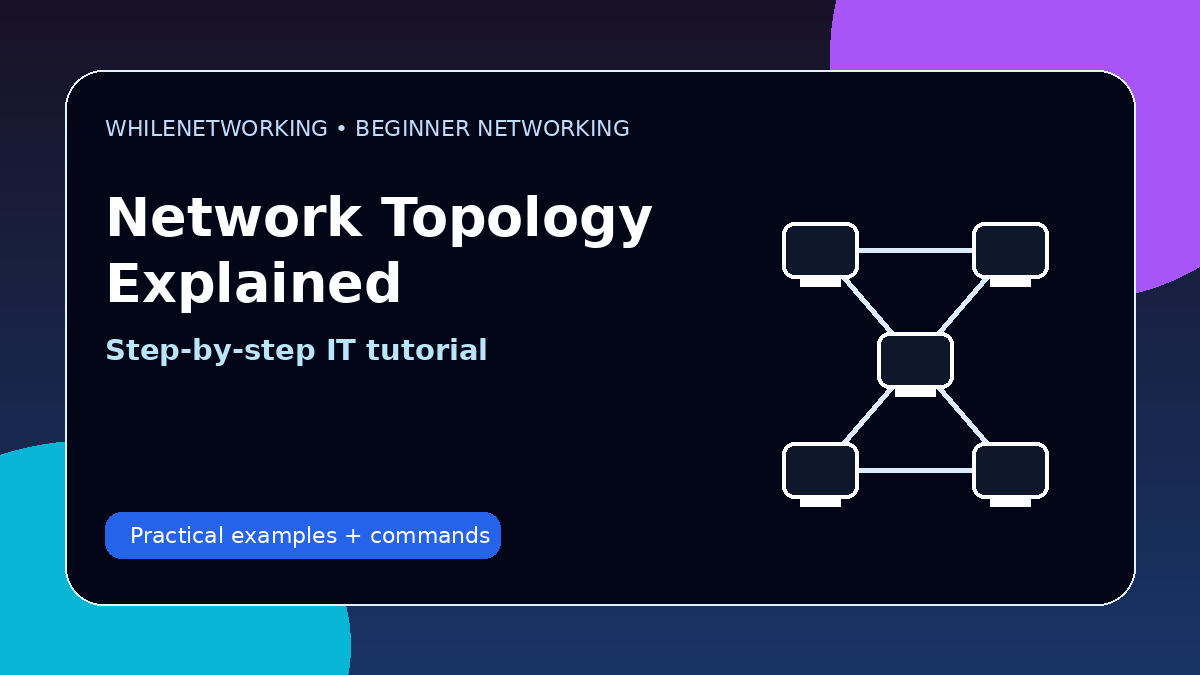
Network topology describes how devices and connections are arranged. It can be physical, logical, or both.
Star topology
In a star topology, devices connect to a central switch or access point. This is common in modern home and office networks.
Mesh topology
In a mesh network, devices or nodes connect through multiple paths. Mesh designs can improve resilience and coverage.
Bus topology
Bus topology is an older design where devices share a single communication line. It is less common in modern Ethernet networks.
Why topology matters
Topology affects troubleshooting, performance, redundancy, cost, cabling, and how easily the network can grow.
Useful commands for beginners
ping gateway
tracert server
show cdp neighbors
show lldp neighbors
arp -a
Quick beginner checklist
- Write down the exact problem and error message.
- Check whether one device or many devices are affected.
- Confirm IP address, gateway, DNS, cable or Wi-Fi status.
- Test one thing at a time and compare the result.
- Document your findings before escalating the issue.
Final thoughts
Beginner networking becomes easier when you understand the basic building blocks and follow a clear troubleshooting process. Practice these commands in a safe lab or home network before using them in production.
Educational note: This tutorial is for learning purposes. Test carefully and do not change production networks without permission, documentation, and backups.