
Reader level: Medium
A practical Git workflow for small teams using main, feature branches, pull requests, tags and release branches. This tutorial is written for developers, IT professionals and technical learners who already understand the basics and want more practical, production-ready guidance.
What you will learn
- Why branching strategy matters
- Main branch rules
- Feature branch workflow
- Release and hotfix handling
- Pull request checklist
Why branching strategy matters
Why branching strategy matters is important for building reliable applications that are easier to maintain, debug and secure. For medium-level developers, the goal is not only to make code work, but to make it predictable under real production conditions.
Main branch rules
Main branch rules is important for building reliable applications that are easier to maintain, debug and secure. For medium-level developers, the goal is not only to make code work, but to make it predictable under real production conditions.
Feature branch workflow
Feature branch workflow is important for building reliable applications that are easier to maintain, debug and secure. For medium-level developers, the goal is not only to make code work, but to make it predictable under real production conditions.
Release and hotfix handling
Release and hotfix handling is important for building reliable applications that are easier to maintain, debug and secure. For medium-level developers, the goal is not only to make code work, but to make it predictable under real production conditions.
Pull request checklist
Pull request checklist is important for building reliable applications that are easier to maintain, debug and secure. For medium-level developers, the goal is not only to make code work, but to make it predictable under real production conditions.
Practical examples and commands
Use these examples as patterns. Adjust names, paths, services, databases and application details for your own environment.
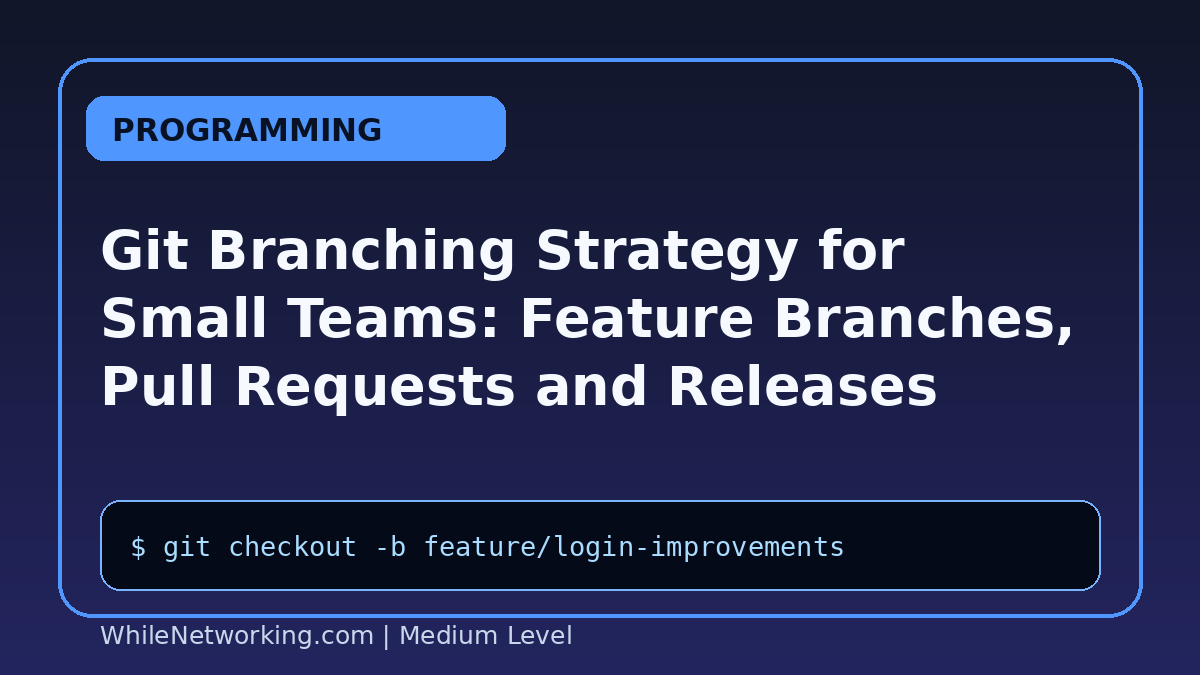
git checkout -b feature/login-improvementsgit statusgit push -u origin feature/login-improvementsgit tag v1.2.0
Recommended workflow
- Define the problem clearly before changing code or configuration.
- Use small, testable changes instead of large risky rewrites.
- Add logging, tests or documentation where future troubleshooting will benefit.
- Review security, error handling and edge cases before deployment.
- Verify the result in development, staging and production where possible.
Common mistakes to avoid
- Optimizing too early without measuring the real bottleneck.
- Hardcoding values that should be configuration.
- Ignoring error handling, retries, timeouts and security controls.
- Writing code that works locally but is difficult to operate in production.
FAQ
Who is this guide for?
This guide is for medium-level readers: junior to intermediate developers, IT professionals moving into development, and support engineers who work with application teams.
Can beginners still follow this tutorial?
Yes, but beginners may need to review the basic concepts first. The examples are practical and intentionally explained in a clear way.
Is this suitable for production systems?
The guidance is production-oriented, but always test carefully in your own environment before applying changes to live systems.
Disclaimer: This tutorial is for educational purposes. Test carefully before applying code, commands or configuration changes. WhileNetworking is not responsible for misuse, damage, data loss or production issues.