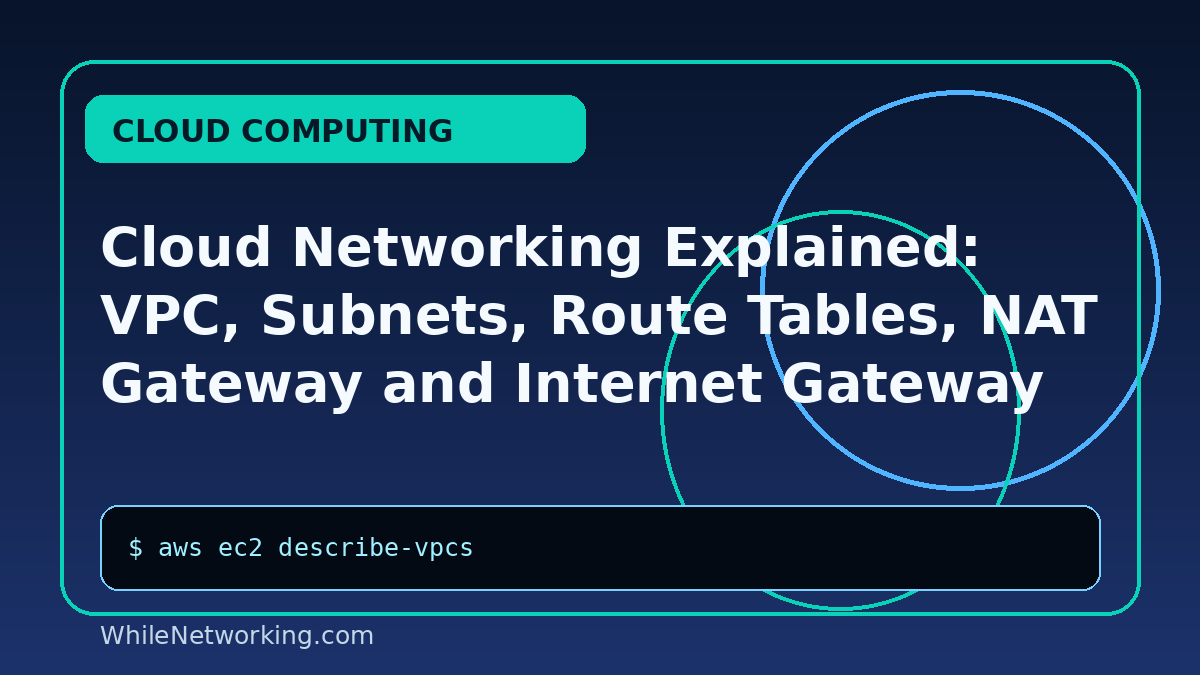

Cloud Networking Explained: VPC, Subnets, Route Tables, NAT Gateway and Internet Gateway is a moderate-level cloud computing tutorial for moderate cloud learners who need practical network design knowledge. It focuses on practical architecture, security, operations and troubleshooting instead of only definitions.
Who this guide is for
This guide is best for IT support engineers, system administrators, network technicians, junior cloud engineers and cybersecurity learners who already understand basic servers and networking but want stronger cloud skills.
What a VPC is
A VPC is your logically isolated network inside the cloud provider. It lets you define IP ranges, subnets, routing, gateways and security boundaries for workloads. Good VPC design makes troubleshooting and security easier later.
Public and private subnets
Public and private subnets is a key part of practical cloud computing. For moderate readers, the goal is not only to know the definition, but to understand how this decision affects security, availability, performance, cost and troubleshooting.
Route tables and gateways
Route tables and gateways is a key part of practical cloud computing. For moderate readers, the goal is not only to know the definition, but to understand how this decision affects security, availability, performance, cost and troubleshooting.
NAT gateway design decisions
NAT gateway design decisions is a key part of practical cloud computing. For moderate readers, the goal is not only to know the definition, but to understand how this decision affects security, availability, performance, cost and troubleshooting.
Troubleshooting cloud routing
Troubleshooting cloud routing is a key part of practical cloud computing. For moderate readers, the goal is not only to know the definition, but to understand how this decision affects security, availability, performance, cost and troubleshooting.
Useful commands and checks
The exact command depends on your cloud provider, region and permissions. Use these examples as a practical starting point.
aws ec2 describe-vpcsaws ec2 describe-subnetsaws ec2 describe-route-tablestraceroute 8.8.8.8
Implementation workflow
- Define the workload requirement, users, data type, uptime need and security risk.
- Choose the simplest cloud service that meets the requirement without unnecessary complexity.
- Design identity, networking, monitoring and backup controls before production deployment.
- Test the configuration in a non-production environment first.
- Document architecture, cost assumptions, rollback steps and ownership.
Common mistakes to avoid
- Leaving resources publicly accessible without a business reason.
- Using long-term admin credentials where roles or scoped permissions are safer.
- Ignoring budgets, tags and monitoring until after the bill or outage happens.
- Deploying production workloads without backup, logging and restore testing.
FAQ
Is this cloud tutorial beginner or advanced?
It is written for moderate readers. Basic cloud terms are explained, but the focus is on practical IT operations and design decisions.
Does this apply to AWS, Azure and Google Cloud?
Yes. The concepts apply across major cloud providers, although service names and command syntax are different.
What should I learn before cloud computing?
Networking, Linux basics, DNS, HTTP, firewalls, identity management and basic scripting will make cloud learning much easier.
Disclaimer: This tutorial is for educational purposes. Test changes carefully before applying them. WhileNetworking is not responsible for misuse, damage, data loss, unexpected cloud cost or production issues.