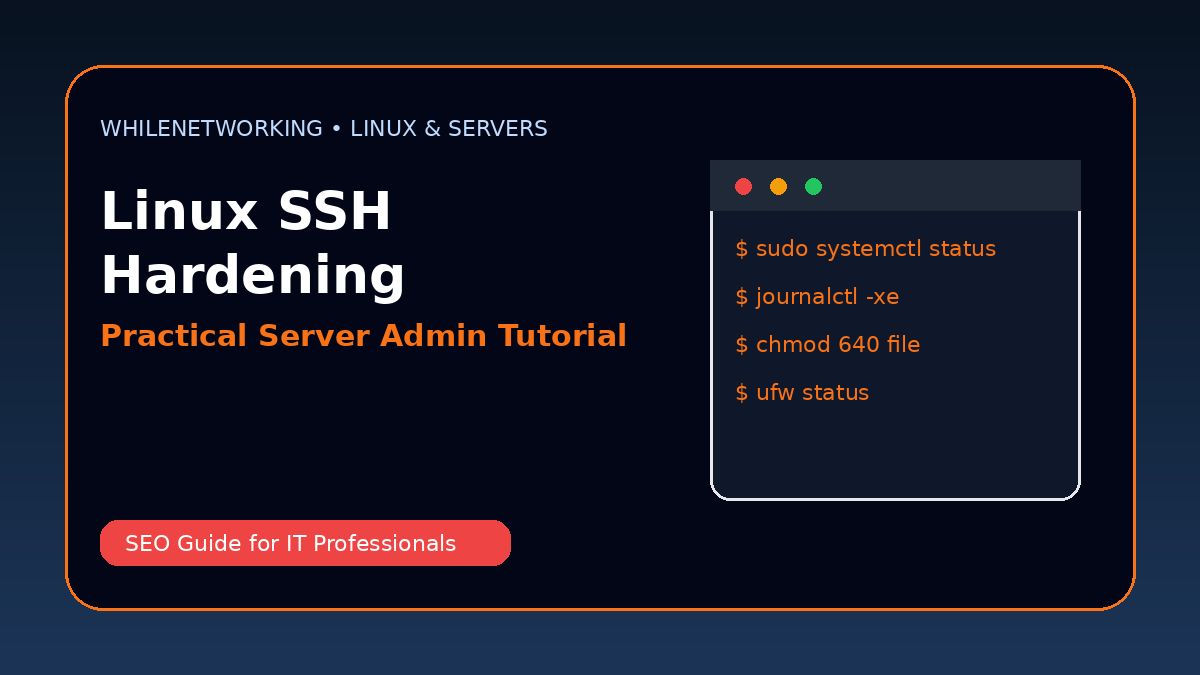

Linux Ssh Hardening Guide is a practical skill for IT professionals who manage Linux servers, cloud instances, web hosting platforms, and internal infrastructure. This tutorial gives a clear, SEO-friendly and hands-on explanation with examples you can practice safely.
- Understand the key Linux concept
- Learn practical commands used by admins
- Review common troubleshooting scenarios
- Follow safe production server practices
Why SSH hardening matters
SSH is the main remote access method for Linux servers. Weak SSH configuration can allow brute-force attacks, unauthorized access and server compromise.
Use SSH keys
SSH keys are stronger than passwords when managed properly. Protect private keys with passphrases and never share them through insecure channels.
Disable direct root login
Using a normal user with sudo is safer than logging in directly as root. This improves accountability and reduces attack impact.
Change carefully
Before changing SSH settings, keep an existing session open and test a second login. A mistake can lock you out of the server.
Monitor SSH access
Review authentication logs, failed login attempts and unexpected user activity regularly.
Useful Linux commands
sudo nano /etc/ssh/sshd_config
sudo sshd -t
sudo systemctl reload ssh
ssh-keygen -t ed25519
sudo journalctl -u ssh --since "today"
Server administration checklist
- Check current system state before changing configuration.
- Take backups of important files and configs.
- Test commands in a lab or staging environment when possible.
- Apply one change at a time and verify the result.
- Document the change, reason and rollback step.
Final thoughts
Linux server administration becomes easier when you combine command-line practice with careful change management. Keep practicing these commands and build your own server troubleshooting checklist.
Educational note: This tutorial is for learning purposes. Test carefully and do not make production changes without permission, documentation and backups.