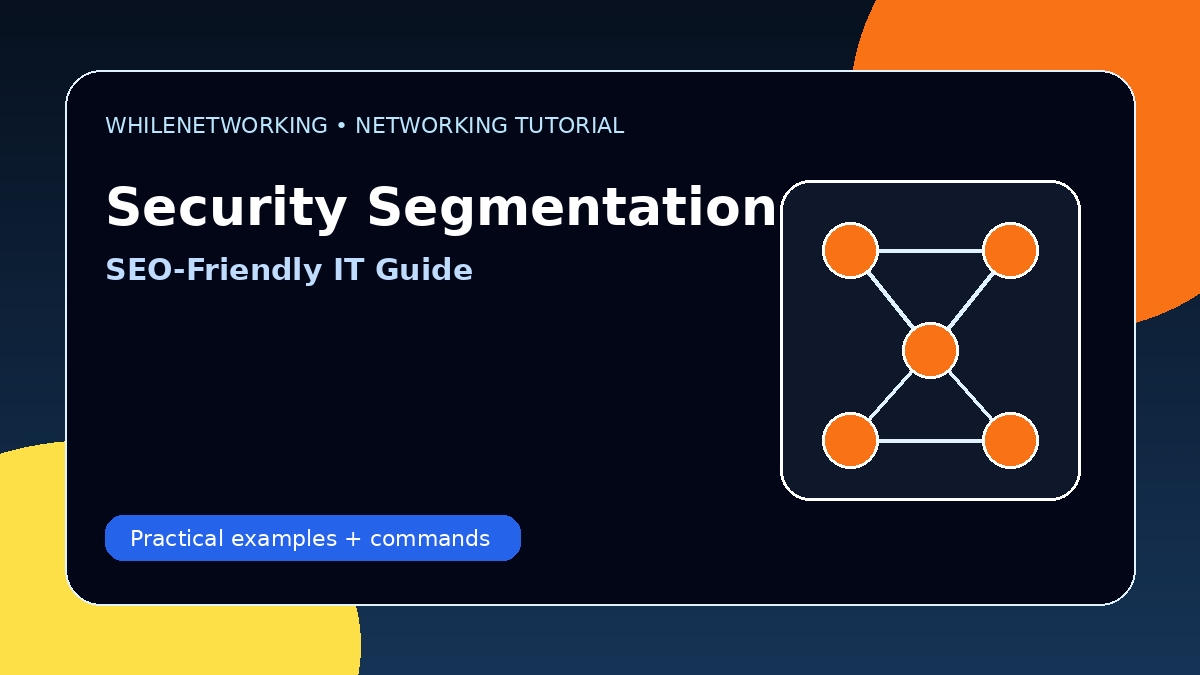

Network Security Segmentation Basics is a practical networking topic for IT support, system administration, cybersecurity, and cloud operations. This tutorial is written for readers who already know basic IP addressing and want to improve real troubleshooting skills.
- Clear explanation of the networking concept
- Real symptoms IT teams see in production
- Useful commands for Windows, Linux, or network devices
- Safe troubleshooting and documentation tips
What is network segmentation?
Network segmentation separates devices and services into smaller network zones. This limits unnecessary communication and reduces the impact of security incidents.
Why segmentation matters
If every device can talk to every other device, malware, mistakes, or compromised accounts can spread faster. Segmentation creates controlled boundaries.
Common segments
Typical segments include users, servers, printers, guest Wi-Fi, voice, cameras, management, development, and production systems.
Role of firewalls
Firewalls enforce rules between segments. A good rule allows only required traffic and blocks unnecessary access by default.
Operational advice
Start simple. Document the current network, identify critical assets, create zones, define allowed traffic, and test changes carefully before enforcing strict rules.
Useful commands
show vlan brief
show access-lists
Get-NetFirewallRule
nmap -sS target
tracert server-name
Practical troubleshooting workflow
- Confirm the exact symptom and affected users.
- Collect IP, DNS, route, firewall, and device status information.
- Compare a working device with a failing device.
- Make one controlled change at a time.
- Document the cause, fix, and prevention step.
Final thoughts
Strong networking skills come from understanding concepts and practicing with real examples. Use these commands in a lab first, then apply the same structured approach at work.
Educational note: This tutorial is for learning purposes. Test carefully and do not make production changes without approval, documentation, and backups.