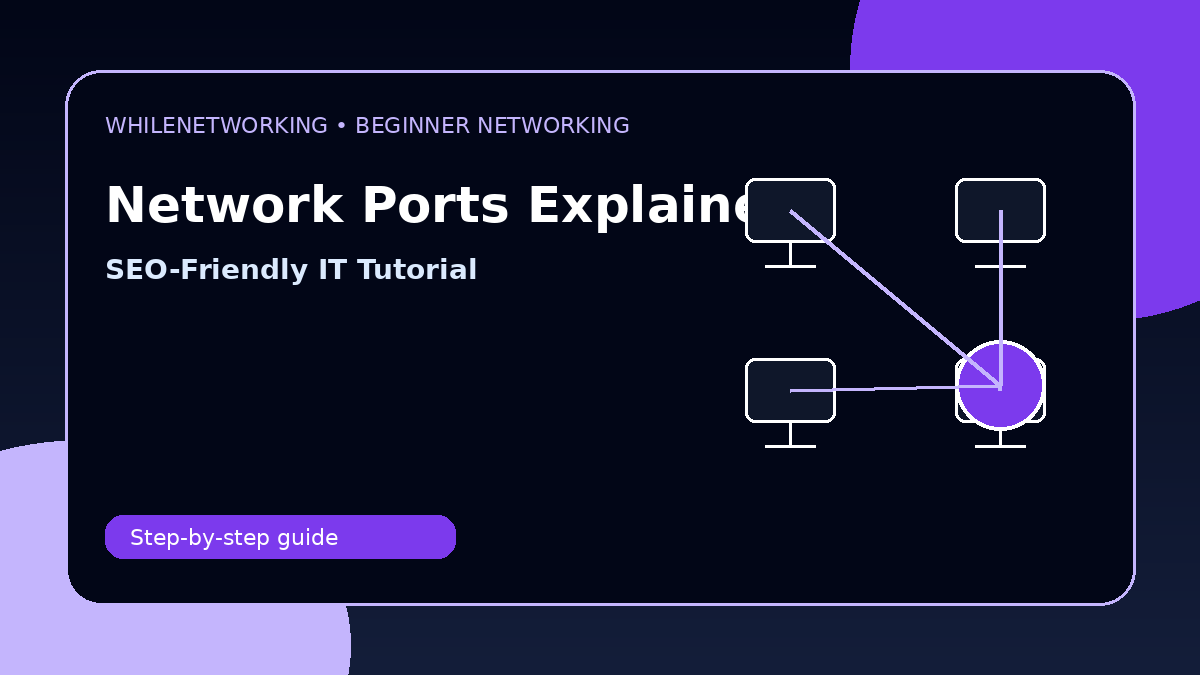

Network Ports Explained is a useful topic for new IT support staff, students, home lab learners, and anyone starting a networking career. This beginner-friendly tutorial explains the topic clearly and gives practical troubleshooting examples.
- Simple explanation for beginners
- Real-world IT support examples
- Useful commands for practice
- Safe troubleshooting checklist
What is a network port?
A network port helps identify the service or application receiving traffic on a device. IP addresses identify the device, while ports identify the service.
TCP vs UDP
TCP is connection-oriented and reliable. UDP is faster and connectionless. Web browsing, SSH, and email often use TCP, while DNS, streaming, and voice traffic may use UDP.
Common port numbers
HTTP uses 80, HTTPS uses 443, SSH uses 22, DNS uses 53, SMTP uses 25, and RDP uses 3389.
Why ports matter in IT support
Firewall rules, blocked applications, remote access, website issues, and server troubleshooting often require understanding ports.
Security reminder
Do not open ports publicly unless required. Exposed ports can increase security risk if services are not patched and protected.
Useful commands for practice
netstat -ano
Test-NetConnection example.com -Port 443
telnet example.com 80
ss -tulpen
nmap -sV target-ip
Quick troubleshooting checklist
- Confirm what changed recently.
- Check whether one device or many devices are affected.
- Verify cable, Wi-Fi, IP address, gateway, and DNS.
- Run simple tests before changing advanced settings.
- Document the result and escalate with evidence if needed.
Final thoughts
Networking becomes easier when you learn the basic concepts and follow a structured troubleshooting process. Practice these commands in a safe lab and build confidence step by step.
Educational note: This tutorial is for learning purposes. Test carefully and do not make changes to production systems without permission, documentation, and backups.