
Ospf Explained For Intermediate Learners is a moderate-level networking topic for IT professionals who already understand basic IP addressing, DNS, DHCP, and gateway troubleshooting. This guide focuses on practical network administration, design decisions, and real troubleshooting workflows.
- Core concept and practical use cases
- Design considerations for real environments
- Troubleshooting workflow and commands
- Common mistakes to avoid
What OSPF is
OSPF is a link-state dynamic routing protocol commonly used inside enterprise networks. It builds a topology database and calculates the best path using cost.
Why areas matter
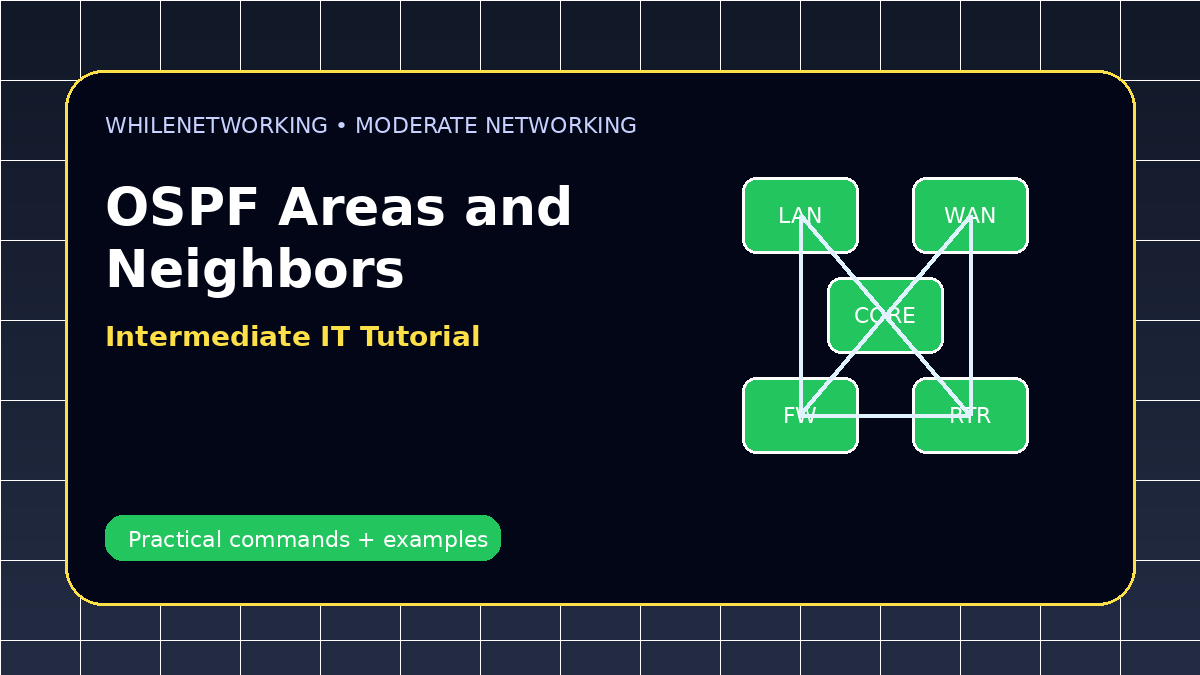
OSPF areas reduce routing overhead and organize the topology. Area 0 is the backbone area, and other areas usually connect through Area 0.
OSPF neighbors
Routers must become neighbors before sharing routing information. Neighbor formation depends on matching area ID, subnet, hello/dead timers, authentication, MTU, and network type.
LSAs in simple terms
LSAs are link-state advertisements. They describe network topology information that OSPF routers use to build the link-state database.
Troubleshooting OSPF
Check adjacency state, interface area, timers, authentication, passive interfaces, network statements, MTU mismatch, and route filtering. Always compare both sides of the link.
Useful commands and checks
show ip ospf neighbor
show ip ospf interface brief
show ip route ospf
show ip ospf database
debug ip ospf adj
Moderate-level troubleshooting checklist
- Confirm the expected design before changing configuration.
- Compare symptoms from client, switch, router, firewall, DNS, and application layers.
- Check logs and command output from both sides of a link or session.
- Look for recent changes, maintenance windows, failed updates, or firewall rule changes.
- Document findings and rollback steps before applying fixes.
Final thoughts
Moderate networking skills come from connecting concepts with evidence. Use commands, logs, diagrams, and controlled testing instead of guessing.
Educational note: This tutorial is for learning purposes. Test carefully in a lab or approved environment before applying changes to production systems.